


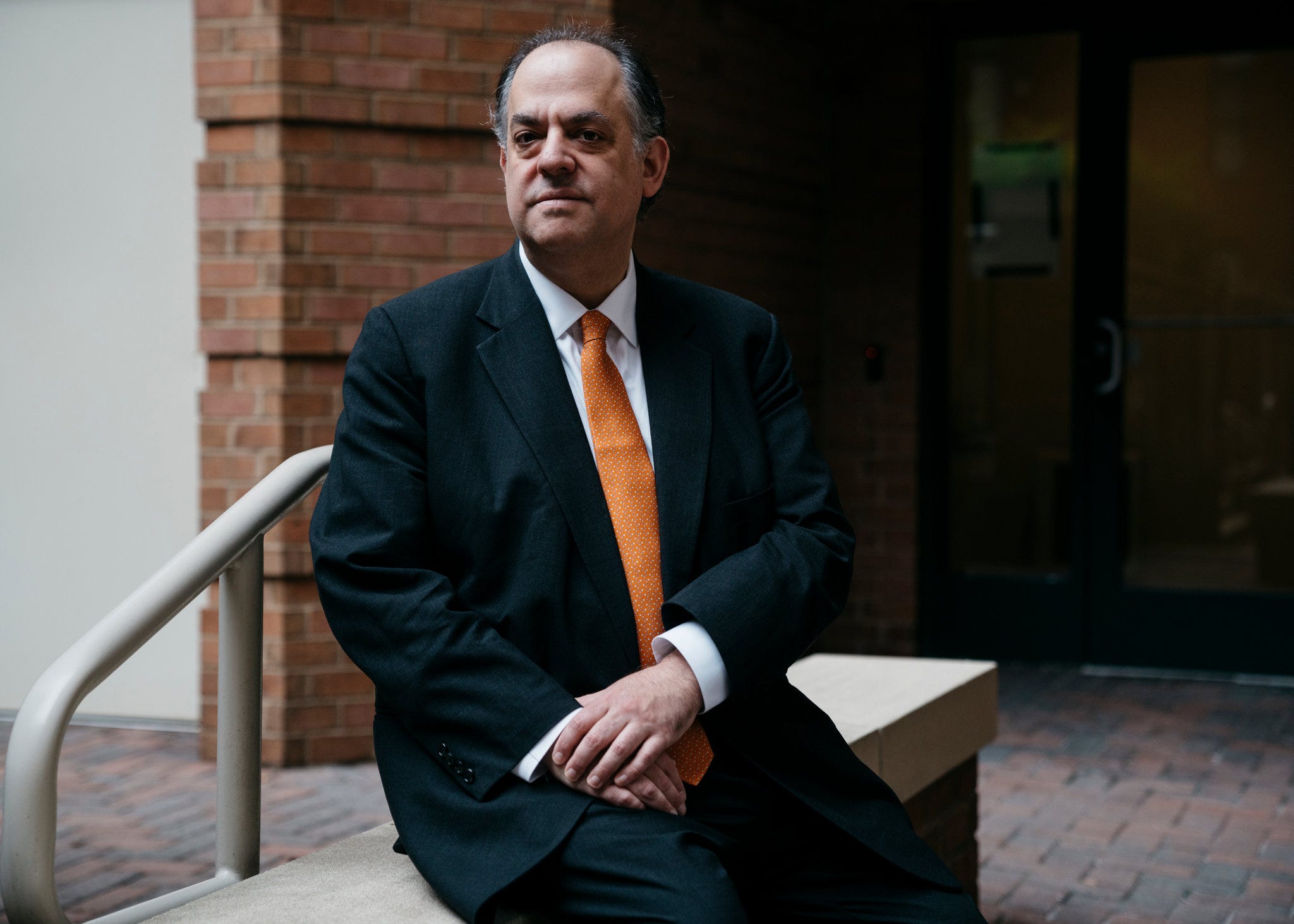
On September 17, 2024, forty-five minutes after Governor Gavin Newsom signed a pair of bills restricting AI-generated political content, Theodore H. “Ted” Frank was in the Eastern District of California filing a complaint against them. Frank, 57, runs the Hamilton Lincoln Law Institute, the nonprofit public-interest firm he co-founded at the end of 2018 with Melissa Holyoak (now an FTC commissioner), and its Center for Class Action Fairness, which he started in 2009 and which has since knocked more than $650 million off excessive attorney fee requests.
Frank came out of Benjamin Franklin High School in New Orleans, earned an economics degree at Brandeis, finished at the University of Chicago Law School in 1994 with Order of the Coif and a seat on the law review, clerked for the legendary Frank Easterbrook on the Seventh Circuit, and spent a decade defending class actions at Kirkland & Ellis, Irell & Manella, and O’Melveny & Myers before taking a fellowship at the American Enterprise Institute to study the Class Action Fairness Act.
Adam Liptak of the Times calls Frank the leading critic of abusive class action settlements; the American Lawyer called him the indefatigable scourge of underwhelming ones. In 2018 he argued Frank v. Gaos at the Supreme Court on his own behalf. Find him and his work at hlli.org and @tedfrank, among other places.
OLIVER BATEMAN
Before we get to any of it: somebody told me you had a hand in the early days of Baseball Prospectus. I loved those guys. Is that true?
FRANK
Absolutely true. Back in the old Usenet days. Gary Huckabay, Christina Kahrl, Clay Davenport, all of them. Rec.sport.baseball started up something called the Baseball Prospectus, and I wrote the Chicago White Sox chapter for the very first one, which was just samizdat, photocopied and passed around. Then when they got a real publisher they forgot I was on the team and stopped asking me. So I was never a huge contributor. I wrote some essays for a few of the later editions, but I was gone by the time Nate Silver was there and the other people who made it famous.
OLIVER BATEMAN
I came out of rec.sport.pro-wrestling, which is how I ended up on the sportswriting side of my career. Some of those guys landed at places and gave me work.1 Kindred spirits. Those were good days to be on the forums.
FRANK
Absolutely. Usenet. Some really great names.
OLIVER BATEMAN
I told a bunch of people this was going to be the topic and got the same answer every time. Oh, class actions, I see those on Instagram every day. The fruit drink one, the Roblox one. I fill them all out. Which seems like a strange way to run public enforcement, and yet the ads are everywhere.
FRANK
Those ads mostly just sign you up to receive money the defendant is going to pay out anyway. There is a pool, and it gets split among the people who sign up. And some of those ads are not even for class actions. There are people signing you up for mass arbitration, threatening to file ten thousand arbitration claims instead of bringing a class action, and because the defendant does not want to defend ten thousand arbitrations, they agree to a group settlement that looks a lot like a class action. Which is ironic, given that they put the arbitration clause in to avoid exactly that problem. The lawyers are creative enough to say, fine, you have to give us a remedy, and we will go find people who want that remedy. There is a lot of that about.
Our innovation was recognizing the shape of the system. The lawyers are trying to get paid. The defendant is trying to get out as cheaply as possible. The way you accomplish both is to structure a settlement where the class does not actually get anything, and then, to get it past the judge, you pretend the class is getting something. In the American system you do not ask to be in a class action. You are just in it unless you affirmatively opt out. The lawyer shows up with one class member and says, this person represents everybody else, I now represent everybody with your permission, Your Honor, and look at this great settlement I won, so please appoint me as counsel for the entire class. Twenty years ago especially there was a long history of attorneys structuring settlements so the attorneys got all the money and the class got nothing, while pretending there was real injunctive relief, or coupons, or something that was not actually worth anything.
OLIVER BATEMAN
Was there any public good coming out of that at all?
FRANK
You have law professors arguing that it causes deterrence. The corporation has to pay, it does not matter who they pay, and therefore they will not act badly, because they will be punished by having to pay. The fact that consumers are not getting the money does not really matter.
I think that disregards the incentive structure for the lawyers. Say it is a really crummy case, but it will cost millions of dollars for the defendant to defend. The lawyers can say, hey, give us three million to go away. If you can build an imaginary settlement where the class gets nothing and the lawyers get the full three million in settlement value, now it is profitable to bring that case. They get three million, their clients get nothing except illusory injunctive relief or a promise not to do it again, and the defendant gets out of litigation without spending five million defending it. Win, win for everybody except the consumer. And because the crummy case is profitable, you get more crummy cases, which hurts deterrence. If everybody gets punished whether they did something wrong or not, that is the opposite of deterrence, because deterrence is the cost of doing something wrong versus the cost of doing it right.
Our argument is that if you force the attorneys to share the money with the class, they no longer have the incentive to bring the bad cases. If they get twenty-five percent of settlement value instead of a hundred percent, that rinky-dink million-dollar or three-million-dollar settlement no longer pays them enough to take the case and carry the risk. So they can only take the good cases, the strong cases, the ones that might actually collect money for a class. We are deterring bad class actions through a rule that requires class members to get paid, and I think that is a feature rather than a bug.
OLIVER BATEMAN
How unique is the American class action?
FRANK
Completely unique. Every time I talk to European lawyers or Asian lawyers, their jaws drop. How do you do this? To the extent those systems are starting up collective litigation, they require licensing by the state to bring the case in the first place, and they require the class to opt in, so the defendant cannot buy up all the claims at once and the attorney cannot use the prospect of disposing of all the claims to extract settlement value. Different protections, different costs, less benefit to the lawyers. The gigantic contingency fees we see here are also unique to us, and there is less incentive to be entrepreneurial elsewhere because you cannot make your fortune in that kind of zero-sum scenario.
And then you have places like France, which has no jury trials, where the judges do not come up out of the bar. They are trained separately, and they are used to being inquisitorial. In Anglo-American systems it is adversarial. Our judges do not run investigations. They rely on what the parties put in front of them. You could talk for hours about comparative law, but on class actions the American system is absolutely unique, and very little understood. There is a generic sense out there that a class action is a big lawsuit, so every big lawsuit gets called a class action even when it is nothing of the kind.
OLIVER BATEMAN
The defense I hear is that the government gets spared all this enforcement work, so who cares where the money lands.
FRANK
Maybe, maybe not. Many of these class actions are follow-ons to something the government is already investigating. It would be one thing to say the government got there first and therefore we do not need your class action, but that is never the case. The government announces it is going after some company for doing something bad, the stock price drops on the announcement, and then the stock price drops again in anticipation of the securities litigation that is coming. As Matt Levine jokes in his newsletter, everything is securities fraud. Any time you get that stock drop you get the lawyers glomming on, and what are they adding? It is a pure transaction cost. The lawyers take thirty-three percent. About that much money gets spent by the defendant or the defendant’s insurers, which gets passed along into future insurance costs.
And small shareholders do not have the capacity to pull together the claim forms. So it is ironically a wealth distribution upward. The big shareholders, the pension funds, the hedge funds, they get the notices and they have dedicated staff to track them and file, and it is worth it to them because they might collect a hundred thousand or ten thousand or whatever. A small shareholder getting thirty or forty dollars often finds it is not worth the time. On the consumer settlements, where you are talking five or six dollars, it may not be worth the postage.
OLIVER BATEMAN
When does this become an industry? It is a twentieth-century innovation. At what point do firms work out that they can run it as a chop shop and process them at volume? Our legal system is very good at finding those seams.
FRANK
With the expansion of tort law in the sixties, people started to recognize the class action as a procedural device for aggregating smaller claims, especially once you had the consumer fraud statutes coming in through the sixties, seventies, and eighties. At first they tried to run class actions for asbestos claims, and the Supreme Court policed that and shot it down. The class is supposed to be similarly situated, and you are gluing together all these people with different claims and different defenses who are not sufficiently similar. There were attempts at large-scale employment class actions, most famously Wal-Mart v. Dukes, and the Supreme Court shot down certification there too.
So it takes off in the eighties, nineties, and 2000s, especially as lawyers learn you can find magnet jurisdictions. You sue in Madison County, Illinois, and the court certifies the class before the defendant even shows up. Then the judge is willing to enforce really, really expensive discovery, and the defendant has basically no recourse in a jurisdiction where the judges and the lawyers are a very serious good-old-boy network. There were a few other places like that. Parts of Texas before Texas had tort reform, Alabama, California. You had nationwide class actions being settled in tiny state courts with elected judges, the lawyers walking away with millions, the class getting nothing, and the defendant with very little chance to defend itself.
Then in 2005 Congress passed what I think was the primary legislation of the Bush administration’s second term, the Class Action Fairness Act, which moved most of these cases into federal court with a handful of exceptions. That ended one set of problems and made things much better for consumers, for defendants, for everybody except the worst of the lawyers. It also made it possible for my organization, which started doing this in various predecessor forms in 2009, to come in and object in federal court. It is procedurally a lot easier. There are better protections, and the judges will actually grapple with it when you show up and say, this is not the way class actions are supposed to work.
OLIVER BATEMAN
Give me a recent one. Something that has done nothing for anybody and a great deal for the practitioners.
FRANK
We have a case pending right now in the Ninth Circuit. It was a privacy lawsuit against Google. A journalist, not a trial lawyer, determined that you could turn off tracking in Google Maps and it was not supposed to share your data, and then learned that Google was sharing it anyway, whether you turned it off on your phone or turned it off in the app. State attorneys general came in, fined Google a bunch of money, and forced Google to stop. And simultaneously there is a follow-on class action built on the journalists’ research, and that has settled.
The settlement is that Google creates a fund of sixty-two million dollars. The lawyers get nineteen million and the class gets zero. The rest is a big slush fund for a set of left-wing groups. Nothing requires the recipients to be left-wing other than that being what the attorneys chose to present to the court. They do it partly because some of these organizations are clients of the law firm, some of them have lead partners of the firm sitting on their boards, some of them are the attorneys’ alma maters, and some of them are just left-leaning outfits that are promising to do left-wing things. The class is two hundred million people. Maybe a hundred fifty million of them would not like what is being done in their name with their money.
And the judge decides who gets paid. This judge was very excited about getting to stop being a judge and start being a grant administrator with a big pot of philanthropy. We said, why are these unrelated organizations, which are not even unrelated, they are affiliated with class counsel, getting the class’s money? If the plaintiffs’ lawyers want to support the ACLU, it should come out of their pockets and not the class’s pockets. It is perfectly feasible to distribute that money to the class. Much smaller settlements get distributed to similar class sizes all the time. You can complain that if you divided it evenly among every single class member it would be a tiny amount and not worth paying out, but you do not have to do it that way, and most class actions are not done that way. Most class actions settle for less than a dollar per class member. You create a claims process, let class members sign up if they want the money, and divide it that way.
OLIVER BATEMAN
Is it common now to see outside groups earmarked in a settlement, or is that rare?
FRANK
It is a doctrine called cy pres. It used to be much more common, and we took the vanguard in fighting it, because it was a way to take money from consumers and give it to left-wing groups, or friends of the attorneys, or in one case relatives of the attorneys, or friends of the judge. There was a lot of corruption in that process. It was never going to go to, say, the Federalist Society, or to an organization like mine that actually fights for class members. It went to organizations that fight for lawyers and for left-wing causes.
There was a case involving Citibank shareholders where they were going to give a million dollars to organizations that help mortgage holders sue banks like Citibank. That is not what shareholders want. That is hurting the shareholders. At that point you are not litigating for the class, you are litigating for a group of lawyers you are friendly with. We eventually got that money distributed to the class. And with the challenges we brought, the tactic of settling so that the class gets nothing while the lawyers’ favorite charities or nonprofits or activist organizations or universities get the money largely dissipated. But there is one big law firm out in California that thinks it can still get away with it, that thinks I cannot be everywhere at once, which is probably true. They will keep trying, because they get to hand out tens of millions of dollars to their favorite nonprofits and then get paid a commission for fundraising they could not otherwise have charged for. These are involuntary donations by the class.
OLIVER BATEMAN
When you see those earmarks in a settlement, is there some argument attached? Some document explaining why the funds cannot go to the class and why they have to be substituted out to these organizations?
FRANK
They usually sell it as, look how large the class is.
OLIVER BATEMAN
You can’t reach them all. Pennies.
FRANK
You cannot reach them all, and this is better for the class, and the class would prefer this to getting a twenty-five-cent check. Except that is true of every settlement. Every settlement is settling for less than a dollar a class member. Every once in a while you get a really big one and it is five dollars a class member. And the way it actually gets distributed is you have a claims process, somewhere between half a percent and ten percent of the class signs up, and suddenly those twenty-three-cent checks are twenty-three-dollar checks, because so few class members bother. That is far from optimal, but at least the money is going to the class and everybody in the class has a fair shot at it.
The argument on the other side is that the attorneys know better, and they would rather see the money go to the ACLU, and the ACLU will do more good with it than the class would. It is a very paternalistic view of what class members want. Give the judge the power to be a grant administrator instead of telling him he needs a claims process where class members sign up and get very small checks, and the lawyers are going to prefer handing the money to their favorite nonprofits. They get ceremonies. They get to stand there with the oversized check.
My alumni magazine ran a class action attorney, an alumnus, who distributed money from a settlement to the university. The law school was very, very excited and featured him. They are not featuring me in the alumni magazine for winning money for consumers. They want the money to go to the law school. So on the one hand you get the ceremony with your alma mater and the oversized check and the gala dinner, or maybe your friend works at a nonprofit and you can help your friend out. On the other hand you can send four million ten-dollar checks and not even get a Christmas card. You get a ten-dollar check, you do not feel grateful to the class action lawyer. You are a little annoyed that he is getting nineteen million and you are getting ten dollars out of the forty million they won. So the incentive is for the lawyers to do that.
OLIVER BATEMAN
For the record, I’m always happy to get the ten-dollar check. I sign up for every one that comes our way. There was one from a juice company, some natural juice thing, and I think that came back twenty-five dollars.
FRANK
I once got a two-hundred-dollar check.
OLIVER BATEMAN
I’m genuinely happy about it. It should go to the class.
FRANK
I agree it should go to the class, and the lawyer has an ethical duty to do the best thing for the class. The lawyer self-justifies by deciding the best thing for the class is for the ACLU to have more money, or for Harvard to have more money. Harvard only has a multi-billion dollar endowment, so obviously they need it more than the class does! So you have these fights, and we will see what the Ninth Circuit does with our appeal. The district court was happy to approve the settlement because he likes being a grant administrator. The Ninth Circuit judges do not get to be grant administrators, so maybe they will be more neutral about it. But there are some very bad Ninth Circuit precedents where they have signed off on similarly bad settlements.
We took it to the Supreme Court once. They threw out the settlement on a technicality and did not reach the question of whether you can have settlements like this at all. That was also a Google case, a much smaller settlement, with the same sort of corruption, the lawyers getting paid and the class not getting paid. Maybe it goes back to the Supreme Court. Maybe there is an appetite for it if we lose in the Ninth Circuit. But this law firm has given out tens and maybe hundreds of millions of dollars at this point to its favorite left-wing nonprofits instead of to class members, and has suffered no consequences, no discipline. Why are you breaching your fiduciary duty to a class? And the courts have let them get away with it, sometimes without class members even having an opportunity to object. So we shall see. We shall see what the Ninth Circuit does with this Google settlement.
OLIVER BATEMAN
Is the tide turning your way? Over time, does this get recognized as ridiculous?
FRANK
We have won these cases in several jurisdictions and lost them in a couple. The Supreme Court took it up once and declined two or three other times. We had one case ready to go to the Supreme Court, and the week before the Court was going to consider it, the defendant declared bankruptcy. Whoops, automatic stay. The Court would not hold it in abeyance, and now we will never know.
I think this is the big one. If the courts sign off on a forty-two-million-dollar slush fund to friends of the attorneys, to organizations that say they are going to use the money for things the class will not like, and to organizations that say they are going to use the money in ways I think are illegal, to discriminate on the basis of race, then you are going to see a lot more of these. This is the test case and it is now or never. And if it gets to the Supreme Court there will be a big fight, because you will have a great many organizations saying our nonprofits really need this money, and the class should not get it, and we should.
OLIVER BATEMAN
This is one of those issues where the weight of the world is against the United States, like voter ID. Plenty of other countries mandate it and here it is a knife fight. But even taking the politics out of it, this looks like bad policy and a bad future for the legal system.
FRANK
There are lots of things in the legal system that are bad public policy for the public and very good for lawyers. And wouldn’t you know it, the lawyers are the ones creating the rules for the legal system. To the extent the rest of us countenance that, there is going to be a lot of rent-seeking and wealth extraction out of the productive parts of the economy.
OLIVER BATEMAN
Speaking of rent-seeking and new frontiers, you have taken on AI work. There is going to be an enormous amount of litigation and confusion around AI, and I think especially around speech. How did you get into it?
FRANK
We do not only do class actions. We do regulatory challenges, and lawsuits against disruptions of public order. We have a couple of our own class actions pending on behalf of drivers trapped in their cars by illegal demonstrations by pro-Hamas activists. But when we bring free speech cases, what often happens is the government says, oh, do not worry, this law does not apply to you, therefore you have no standing in federal court, please throw the case out without addressing whether the law is legal or not. So we are very cognizant of needing the right plaintiff, somebody actually facing a threat for their speech or already punished for it.
There was a viral video that came out when Vice President Harris got the nomination. It was AI-generated, a mashup of an AI version of her voice with real clips of her speaking, saying all sorts of self-critical things about herself and Joe Biden. It was very funny and very clearly fake. The YouTube caption said parody. But Elon Musk reposted it to X, where it got millions of views, and because it was Musk, and because it was against Vice President Harris and therefore by implication in support of Trump, the media went nuts. The line was that Musk was trying to deceive people into thinking Harris had actually said these things. Everybody was very disingenuously pretending it was not just a joke. You can complain the joke was offensive. I do not think it was. It was parody and satire, and people say things at least as nasty about Donald Trump.
Then Governor Newsom quotes the Musk tweet quoting the video and says videos like this should be illegal, and we are going to pass legislation to ban it and criminalize it. Now you have the government saying it is going to prosecute the guy who made this video, except the legislation has not passed yet. So we went to the creator, a fellow who goes by the YouTube name Mr Reagan, like Dr Pepper, no period after the Mr, and said, Governor Newsom is threatening you, we would love to represent you pro bono if you do not already have a lawyer, we can sue and block this, and you will get some more publicity for your videos. We want to bring good First Amendment cases vindicating the right to free speech and to make fun of politicians. We signed him up, got a retainer, and waited for the legislation to pass. We waited for Newsom to sign it. We had the complaint written and the briefing ready to go, and forty-five minutes after he signed the bill we were in the Eastern District of California in Sacramento filing, and shortly after that filing a motion for a preliminary injunction, before anybody else had their shoes on.
We got a judge who immediately understood the First Amendment implications and enjoined enforcement. Then a lot of other people sued and joined into our litigation, including X itself, and all of us together got a permanent injunction against laws that either sought to ban the use of AI to make fun of politicians or to penalize social media companies that did not immediately take down and censor these videos. That is now pending before the Ninth Circuit. The government of California has appealed for the right to ban these parodies. Other states are doing it too, Minnesota and, surprisingly, Montana, and we have litigation pending in those states as well.
OLIVER BATEMAN
This is bad legislation whatever your politics, in the same family as a lot of the hate speech sentencing add-ons. Everybody should want to post parodies. I think the worry people have is that they will see the deepfake likeness and register it as real even though it is labeled, which at that point strikes me as buyer beware.
FRANK
You can imagine the worst case scenarios of deepfakes, putting people in scandalous situations or saying plausibly offensive things, as opposed to out-and-out parody. Somebody imitated Joe Biden’s voice and called people during the New Hampshire primary telling them not to vote. But when you are actually defrauding people, or trying to, there are existing laws against that, and that person is facing federal prosecution for those phone calls. When you are talking about parody, that is a different thing. And the California law had no exception for parody. The only exception was a disclaimer, and the disclaimer had to be so large it took up essentially the whole video and made it unwatchable. We posted a mockup of what it would have to look like. It is a giant block of text over the picture.
If you are not creating exceptions for parody or for other legitimate uses of a deepfake, you lose things like the Spencer Pratt campaign, which made very effective use of them. He is in a jurisdiction that is not going to vote for a Republican tied to Trump, so he came in third anyway. But they were entertaining videos and they showed the possibilities. And Governor Newsom himself has posted AI-created images, not videos, but portraits. I believe one was Trump in a dunce cap. Things that would be outlawed by his own legislation. These are effective communication tools. The fact that it is AI doing it does not make it different from other kinds of speech, any more than photography should be treated differently from painting, or radio differently from speech.
OLIVER BATEMAN
The right has pushed a lot of these issues by being fast on new technology, and I’ve spent years writing about which politicians can and cannot meme. They have used AI more than left-wing politicians have, and Pratt is a good example. He became visible on the strength of good memes.
FRANK
I do not think there is anything inherently right-wing about going to the technology. What is happening is that it is hard to do humor on the left now, because nothing can be offensive. What more moderate liberals call the everything bagel problem. You cannot raise one issue, you have to raise all of the issues, and that makes humor and communication more difficult. Also it is a guerrilla technology, and the left already has eighty or ninety percent of the late night hosts pushing.
OLIVER BATEMAN
The Jimmy Kimmels of the world.
FRANK
Right. So somebody adopting a new technology is competing against very well-funded comics with big platforms and really great writers. There is not that ecosystem on the right, or a mainstream media that lets people bubble up from below and make these things.
OLIVER BATEMAN
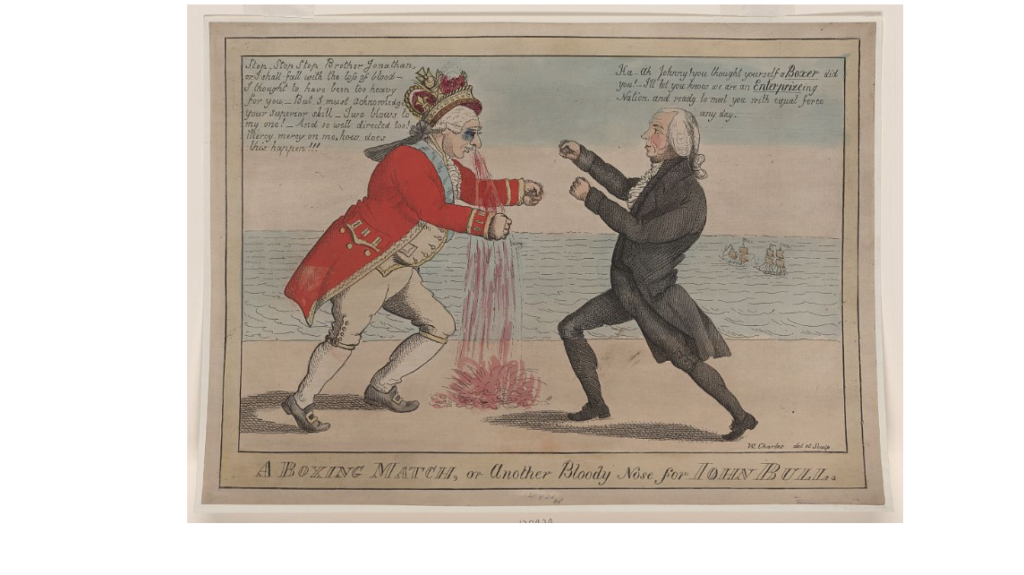
Anybody listening knows that political cartoons in this country have always been nasty. The 1780s, the 1820s, all the moments of great importance in American history. Pretty rough stuff. So of all the areas where there has been openness, it is political parody. People have been brawling over that one for a long time.
FRANK
Absolutely. As bad and as partisan and divisive as things are now, you can find stretches in the first hundred fifty years of the country where it was much more bare-knuckled, much more violent, much more libelous and defamatory. I do not think AI is anything but a new tool in the system. It is like inventing a new color or a new musical note. At the end of the day you still need the message.
OLIVER BATEMAN
In 2026, looking toward 2028, what else is on the table that people should know about?
FRANK
We are going after other bad things in the class action space. We are challenging a settlement now in the Second Circuit where the attorneys are getting three million and the class is getting one million. We have won this principle in other courts, that you cannot have these upside-down distributions where the lawyers get more than the class. We have always argued the class should be the primary beneficiary of any settlement. If the Second Circuit does not agree with us you will have a circuit split, where the courts disagree about the appropriate standard for judging class action settlements, and we would like to take that to the Supreme Court too.
We have those class actions pending against left-wing NGOs that are using civil disorder to punish everyday Americans in the name of, as one of the demonstrators put it, no more business as usual. Can everyday people harmed by actions designed to harm people, intended to harm people, hold them civilly accountable? Or do you have to rely on politically motivated prosecutors who do not believe in punishing this sort of thing? In San Francisco the prosecutor is actually putting people to criminal trial for it. That is not happening in Chicago, it is not happening in D.C., it is not happening in New York. Which leaves the possibility of civil recourse, and we are hoping the courts recognize it. We think tort law is that flexible. A couple of judges have disagreed with us so far. We will see what the appeals courts say.
OLIVER BATEMAN
Where should people find you, and what do you need?
FRANK
We are the Hamilton Lincoln Law Institute, hlli.org. If you have a class action settlement that seems unfair, that seems like the attorneys are collecting all the money, drop us a line. You have legal recourse. We can represent you pro bono as an objector. See what your options are.
And we need attorneys. If you are a good attorney at a big law firm, come take a pay cut and work for us and get to do interesting stuff. Work from home. And if you are a millionaire listening to Oliver Bateman and you want to donate so we can hire more attorneys, we would love to have that money. We are a 501(c)(3) and we rely on the generosity of people who agree with what we do.
OLIVER BATEMAN
Last question, and I think it’s the interesting one. Who wins the World Series?
FRANK
You have to think that as deep as the Los Angeles Dodgers pitching staff is, they have to be the favorites when you have that level of pitching. People are joking now that the Astros have gone on this thirteen-and-ten tear to take the lead in the American League West and might win the division at eighty-four and seventy-eight, so maybe we get a rematch of 2017. The Astros will save baseball. I will root for that to happen. But the Dodgers’ fifth-best pitcher is better than the Astros’ ace, so it seems unlikely.
The way baseball works in the new playoff format, with twelve teams getting in, it is whoever gets hot in late September. In a seven-game series, even the best team in the world against a mediocre team, maybe they have a seventy percent chance. Lots of opportunities for upsets. Right now the prediction markets have the Dodgers around forty-four percent, so they are not the odds-on favorite even now, and forty-four is better than three consecutive coin flips. They are not fifty-fifty coin flips, they are maybe seventy-thirty or sixty-five thirty-five, and that still does not get you to forty-four percent.
OLIVER BATEMAN
The White Sox just need a couple of pitchers to get hot.
FRANK
I love the White Sox. You just need two pitchers to get hot. You need one team to get hit by injuries at the wrong time, and then the bounces of the game in October. The best baseball teams in the world are going to lose fifty times a year. If they lose the wrong four out of seven, they are out of the playoffs. Which is one reason I think the regular season should count more and the playoffs should count less.
OLIVER BATEMAN
I miss those days. I miss them a lot. There were some great pennant races when it was two divisions. Ninety-three, the Braves and the Giants. What a pennant race.
FRANK
I absolutely agree. I miss the races. Now a pennant race is five teams in the American League West fighting to be the first one to eighty-three and seventy-nine. It is ugly. And even then that only gets you to the three seed, and you have to win four straight rounds. Insane.
OLIVER BATEMAN
The one thing I like is that we might get a year where three of the top home run hitters are Japanese. I never thought I’d see that in my lifetime. Pitchers, yes. Home run hitters, no. The White Sox have a guy, the Blue Jays have a guy, and Ohtani is in the mix. I’ve been a fan of Canadian football and Japanese baseball for a long time, so this one is personal.
FRANK
You have Alvarez, who has a shot at a Triple Crown. I never thought I would see the day an Astro contended for the Triple Crown. We shall see. We shall see.
Suggested reading
By Frank
“The Economic Interest Test and Collective Action Problems in Antitrust Tie-In Cases,” 61 University of Chicago Law Review 639 (1994). Written while he was on the law review and posting on Usenet.
“A Taxonomy of Obesity Litigation,” 28 University of Arkansas at Little Rock Law Review 427 (2006). Where he calls the fast-food suits rent-seeking vehicles that are neither good law nor good public policy. Also on SSRN.
“End Open-Ended Litigation,” Washington Post, September 7, 2006. The op-ed that got the head of the trial lawyers’ association to write in and accuse him of attacking the Constitution.
The cases we discussed
Frank v. Gaos, argued October 31, 2018. The docket is public, as is Frank’s Oyez page.
In re Google Location History Litigation, argued in the Ninth Circuit June 11, 2025, with an amicus brief from twenty state attorneys general.
Kurtz v. Kimberly-Clark, the Second Circuit flushable-wipes appeal.
Kohls v. Bonta and Kohls v. Ellison, the AI parody cases in California and Minnesota.
I have written about the old forums more than once, most recently in The Work of the Tubcat and the Old Internet and before that in The Work of the Bodybuilding Forums and The Work of the Closing of the Internet Frontier.


