


Aubrey Sitterson and Jed Dougherty just finished Free Planet, fourteen issues of the most labor-intensive comic on the racks, and in this episode Aubrey explains why he’d sooner do nothing than do comics any other way.
Aubrey Sitterson is a Los Angeles-based comics writer who started as an intern at Marvel, stayed on as an editor, wrote an extended run on G.I. Joe for IDW, hosted the wrestling podcast Straight Shoot, and then built a body of creator-owned work that includes No One Left to Fight (with Fico Ossio), BEEF BROS (with Tyrell Cannon), and The Comic Book Story of Professional Wrestling (with Chris Moreno), which remains the best one-volume history of the one true sport that a civilian can buy.
He publishes the newsletter Atlantis Still Sunk here on Substack. This is his third appearance on the show, after a vintage 2020 episode and Part 2 of this series. I wrote about his approach to speculative fiction in “The Work of Fantasy, Science Fiction, and Fact” a few weeks before the book we discuss here hit the stands.
That book is Free Planet, an Image Comics space opera cocreated with artist Jed Dougherty, colored by Vittorio Astone, lettered by Taylor Esposito, and designed by Mark Kaufman. It follows the Freedom Guard, a group of revolutionaries who have just won their planet Lutheria’s independence from the Interplanetary Development Alliance and now have to figure out what to do with it. The first issue shipped on May 7, 2025, the fourteenth on July 8, 2026, and the second trade paperback, collecting issues nine through fourteen, arrived on August 12. Issues seven and eight, a two-part interlude drawn by guest artists Ilias Kyriazis and Tyrell Cannon, sit outside both collections. I have a question in the letters page of issue three, answered by the book’s in-world historian Dr. Aldous Foyroushi, and I have been needling Aubrey about the resemblance between himself and a certain mustachioed character since June 2025.
We spoke a couple of days after he saw Muse close out their North American tour at the Hollywood Bowl.1
OLIVER BATEMAN: We’ve had a lot of comic book creators on this show. This is your third appearance on here. Last time you were here, Free Planet was just about to drop. Now we’ve got the trade paperback that wraps most of the series up, except for the two interlude issues that sit between the two trades. Fourteen issues. Fourteen issues is hard, man. I’m not a creator, and I don’t know how you and Jed do it, because I don’t think people listening realize how painstaking this is, especially a book where the lettering is quality and the design of every cover is quality. So how do you feel at the end of it?
SITTERSON: Tired. Exhausted, bro. It’s nice of you to point that out, because it was incredibly work-intensive, by design. Jed and I stoked each other. We pushed each other and challenged each other to do something where the work was all on the page and you could see that everything was a deliberate choice. That was the thing for me throughout. I’ve done a bunch of work, especially work-for-hire, and even my creator-owned stuff, where a lot of it was done quickly and done in a way that was fun for me. I was proud of it and I liked it. But I had a big gap between Free Planet and the previous work, and I had a lot of time to think about what it is that makes a significant piece of art. Not everybody will agree with this, but for me it’s deliberate choices. It’s control. Nothing left to chance, no “oh, this looks good, let’s do this,” no “this is how I’m feeling today.” It’s considered. There have been projects where I get to a certain point and think, I should have done this a little differently, or, if I’d only thought about this a little bit more. And the work I really appreciate, whether it’s comics or books or movies or albums, is the stuff that’s considered, the stuff that consists of deliberate choices to achieve a specific effect.
That makes it all sound very clinical, and it doesn’t jibe with everyone’s perception of how art gets created. But I kind of reject the idea that you just follow the muse and the thing springs out of you fully formed. That’s a useful marketing hook. “I’m the creative genius and here it is.” I think it’s dishonest, and it’s certainly not how I do my best work.
OLIVER BATEMAN: Every stitch of it.
SITTERSON: Every stitch of lettering, the covers, little stuff that I don’t think anybody except Jed and me notices. There are A and B covers for every issue. The A covers are in the present. The B covers are in the past, depicting scenes from the Revolutionary War that led up to the beginning of Free Planet.
OLIVER BATEMAN: For anybody listening who hasn’t heard the earlier episode or picked up the trade, this depicts the consequences of a planet, Lutheria, becoming free from the IDA, the Interplanetary Development Alliance, which is a kind of United States-esque imperial conglomerate. Lutheria is seceding and it’s going to get pulled into another war on another planet. And you did so much reading around it, histories of revolutions and revolutionary ideologies, and then with Jed you poured art from across popular comics into it. I don’t want to make it seem like some artiste thing. It’s still meant to be accessible. It’s a military soap opera.
SITTERSON: There’s fighting and fucking and arguments and love triangles. We wanted to tick all the boxes. It was designed to do everything, because my favorite pieces of art, across mediums, aren’t easily boxed into a genre or type. I went and saw Muse at the Hollywood Bowl on Monday night, and Muse is not a cool band anymore.
OLIVER BATEMAN: I haven’t thought about them in a long time.
SITTERSON: They’re still putting out albums. I’ve loved them since their first album came out when I was in high school. The thing that struck me on Monday night is that they do everything. They do sappy love songs, they do angsty teenage-boy stuff, they do political music, long slow ballads, shreddy guitar music. They have a disco song on the new album. It makes them hard to categorize, but it’s also what makes them great, because it’s all still Muse. They strike me as a band that doesn’t want to make a specific type of music. They want to make effective music, period. Similarly with Free Planet, the urge was to make pure comics, comics that make good on the promise of the medium and do things that only work within the medium, and use that to create complexity and depth. In the buildup I talked a lot about wanting to make novelistic comics, and by that I don’t mean comics with a bunch of characters or a bunch of words in them, though Free Planet has both.
OLIVER BATEMAN: It has a lot. Anybody thinking about buying this, individual issues or the two trades, is going to get way more minutes per page than they’re used to. I’m a reader who thinks about that. It’s a tremendous value.
SITTERSON: That’s true, but it’s not what I mean by novelistic depth. In the seventies and eighties, one of the mass entertainment mediums was still the paperback novel, and a lot of the people making comics then were influenced by that and aspired to it. That was their touchstone. The nineties were their own thing, very art-focused, the Image revolution. But starting in the 2000s, instead of aspiring to make novels, people in comics started aspiring to make screenplays and teleplays. We’ve talked about this before. There’s the Bendis approach, lots of ping-pong dialogue, nine panels.
OLIVER BATEMAN: Nine panels, yeah.
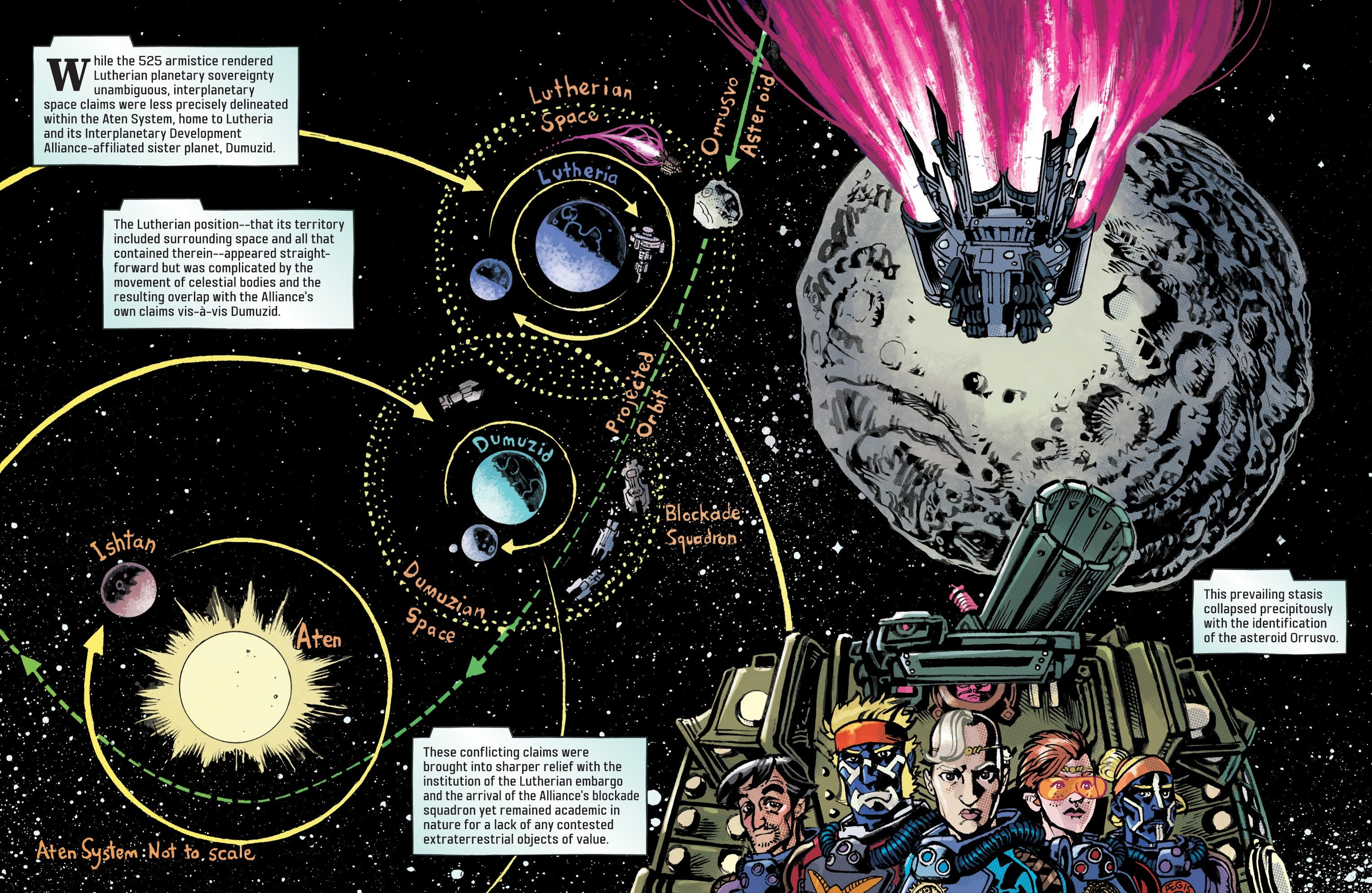
SITTERSON: And at the other end of the spectrum there’s the Warren Ellis approach, which is widescreen: three panels per page, no dialogue, four pages for a spaceship to land. Those were the two big loci, and everybody started doing figure eights around them, using those two approaches in varying degrees. For me that’s a waste of what comics can do. The goal was to do something challenging and deep, not entirely clear, not a direct metaphor, and above all else not merely a depiction of scenes. Because that’s what film and television often are, unless you’re looking at auteur-driven film. Film and television, like comics, are made with an assembly-line approach. The goal is to get each stage complete so it can go to the next person on the line and get out on a monthly basis. We rejected that in terms of process, in terms of how much we micromanaged, in terms of my involvement with thumbnails and designing the pages, and in the way I wrote the thing. All with an eye toward the fact that I’m not creating a story that Jed then draws. What I’m creating is the blueprint for a physical art object, something that has value in and of itself. I’m not trying to sell you a story. I’m trying to sell you a fucking car. That sounds like a pedantic distinction, but it’s an important one.
OLIVER BATEMAN: You always let people know on social media what your influences are, and going back through this, you can see it. The seventies and eighties page layouts. The paperback novel. And this has to be bought in a physical edition, because you have to flip pages. There are portrait pages and landscape pages. There are pages where the layout spirals into some kind of whirlpool, depending on what story is being told on that page. And a lot of callbacks and reworkings where I thought, wow, you’ve given me new respect for something I dismissed as a kid. There was no Barry Windsor-Smith, so why should I look at Mike Grell? Well, no. Mike Grell on Warlord had some really great ideas about how to lay out a page that wasn’t a nine-panel grid. And you came up as an editor, so you know what the standard approaches are and where you can deviate.
SITTERSON: I love the Warlord stuff. It’s really, really great. And this is something else that’s been on my mind lately. When we praise older comics, when we praise any comics, we always have to grade on a curve a little bit, because these motherfuckers were doing them on a monthly basis. Grell was writing and drawing that book month to month himself, and eventually they bring in an inker so he gets some help there. But it’s a mind-boggling amount of work, and so you end up having to find shortcuts. This is why, if you’ve ever read a comic and thought the first twelve issues were great and then it fell off a cliff and got repetitive and aimless and meandering, that’s part of it. As comic fans, that’s part of the beauty of comics. Look at Cerebus.2
OLIVER BATEMAN: I talked about that series with Jesse Moynihan.
SITTERSON: Part of the beauty of Cerebus is that he wanders around in the wilderness enough that eventually he comes to an oasis, and it’s beautiful, it’s amazing. But it’s not a tightly plotted thing, and it’s hard to defend. This happens across the board in comics. Things start strong and deteriorate quickly, because a book somebody spent multiple years ideating and planning, once it’s coming out monthly, you run out of lead time immediately. That affects page layouts and design too. So it’s fun to do genre and medium archaeology, digging back through this stuff to find what you can lift and pull and use, because a lot of it is unmined. A lot of it has been abandoned in favor of newer styles, and oftentimes easier styles. When I was at Marvel I probably gave bad portfolio reviews to people who laid out pages like Mike Grell, because the fact of the matter is those Warlord pages don’t always work. Sometimes they’re confusing. You read the panels out of order and think, what is he thinking? And I dig that, because on a book like Warlord it makes sense. It’s an idiosyncratic work that comes directly from one guy. But when you’re looking for somebody to draw the fifth most popular X-Men book, that’s not what you want. You want somebody who can do a grid that works and won’t cause anybody headaches. I forgot what I’m talking about.
OLIVER BATEMAN: No, that’s a good point, because when I look back at these things I see, here’s a page where there’s a big blue monster and you don’t see his legs, his body is filling the entire page, and there are action sequences happening around his body of someone fighting him, also not showing legs for some reason. And you realize this is really creative, but maybe they’re cutting corners. And it’s also great. But if you’re trying to execute on one of the sure-thing books, you don’t want that. How much are the sure-thing books selling a month nowadays? The big Marvel and DC name books, the Superman and the X-Men. How much do they move anymore?
SITTERSON: I don’t pay enough attention, man. I know Absolute Batman is a wild outlier and it’s selling like a hundred thousand copies every issue.3
OLIVER BATEMAN: Oh, wow.
SITTERSON: But this is where it gets complicated quickly. It’s got approximately two dozen variant covers for every issue, and then second and third printings. That’s not indicative of anything except Absolute Batman. It’s a beast of its own making. I’d guess the rest is a lot less than you’d expect, as evidenced, especially over at Marvel, by how short all the series are. The big, long ongoing series are gone, at Marvel, at DC, at Image. People show up, they do five or six issues, and they’re out. And I get it, because of what we were just talking about. If you want to do something bespoke and considered and deliberate on a monthly basis, month after month, that’s a full-time job in and of itself. And comics don’t pay well enough for one comic to be your full-time job, even successful work.
OLIVER BATEMAN: You’ve said this on many occasions and I think it’s really interesting. As somebody who has always looked for work where the work is, and who’s been in the corporate world in a day job as well, comics has always seemed like it offers the most, but it’s also asked the most of somebody, and the return can be so small even for things I find brilliant. Especially in the US. Some Japanese creators have done reasonably well in that market over the years. Not all of them, but some. But like you say, when it works, it’s addictive. It’s the best worst thing.
SITTERSON: The joke I make is: best medium, worst industry.
OLIVER BATEMAN: It’s the thing I’ve always liked to read the most, though I’ve always been sub-practical about it. I never wanted to do it. I’ve enjoyed it because I can talk to other people about it, and because you see these great things come out where nobody’s trying to get rich directly off them.
SITTERSON: More than people would like are. A lot of stuff is made with that in mind too. That’s the archetypal five- or six-issue high-concept thing that reads like a pilot episode, and there’s a lot of it, because that’s the money that’s flowing into comics right now: IP farms, companies that think they’re going to discover the next Walking Dead or Invincible. For me, comics is the thing that makes comics valuable despite how awful the industry is and how hard it is to get the work into people’s hands, especially if you don’t have Spider-Man in it or an easily commodified identity hook. Getting interesting work that doesn’t have one of those two things into people’s hands is monstrously difficult. But the thing that makes comics worthwhile is the freedom of the form. Some of that is institutional. The number of copies being sold? Who gives a shit? Do whatever you want. Part of it is the existence of publishers like Image, which is a partnership run by comics pros, the founders and then Eric Stephenson and Robert Kirkman, who aren’t trying to make money off exploitation in other mediums. They’re trying to make interesting comics. But also the medium itself. It’s untethered from time in a way no other visual medium is. The cheesy example people thumb their nose at is Spider-Man punching Doc Ock in the face while delivering a block-of-text monologue. People mocked that relentlessly, and it started in the 2000s, when people started looking at comics like film and television and decided that if they’re not paced like storyboards then they’re silly or frivolous. That’s a shame, because it’s a real strength of the medium. A Spider-Man movie cannot do that. Tom Holland cannot speak fast enough to say two or three sentences in the midst of punching a person. That’s a goofy example, but what we’re talking about is being unmoored from time, unmoored from the sequential approach to action and story that must be adhered to in film and television. In a comic you can have a page or a spread or a full issue that encourages and rewards bopping back and forth, reading things out of order, or simply spending more time on one aspect of it than another. Readers are moving through these things at different speeds. That’s incredible, and it doesn’t get discussed or used enough.
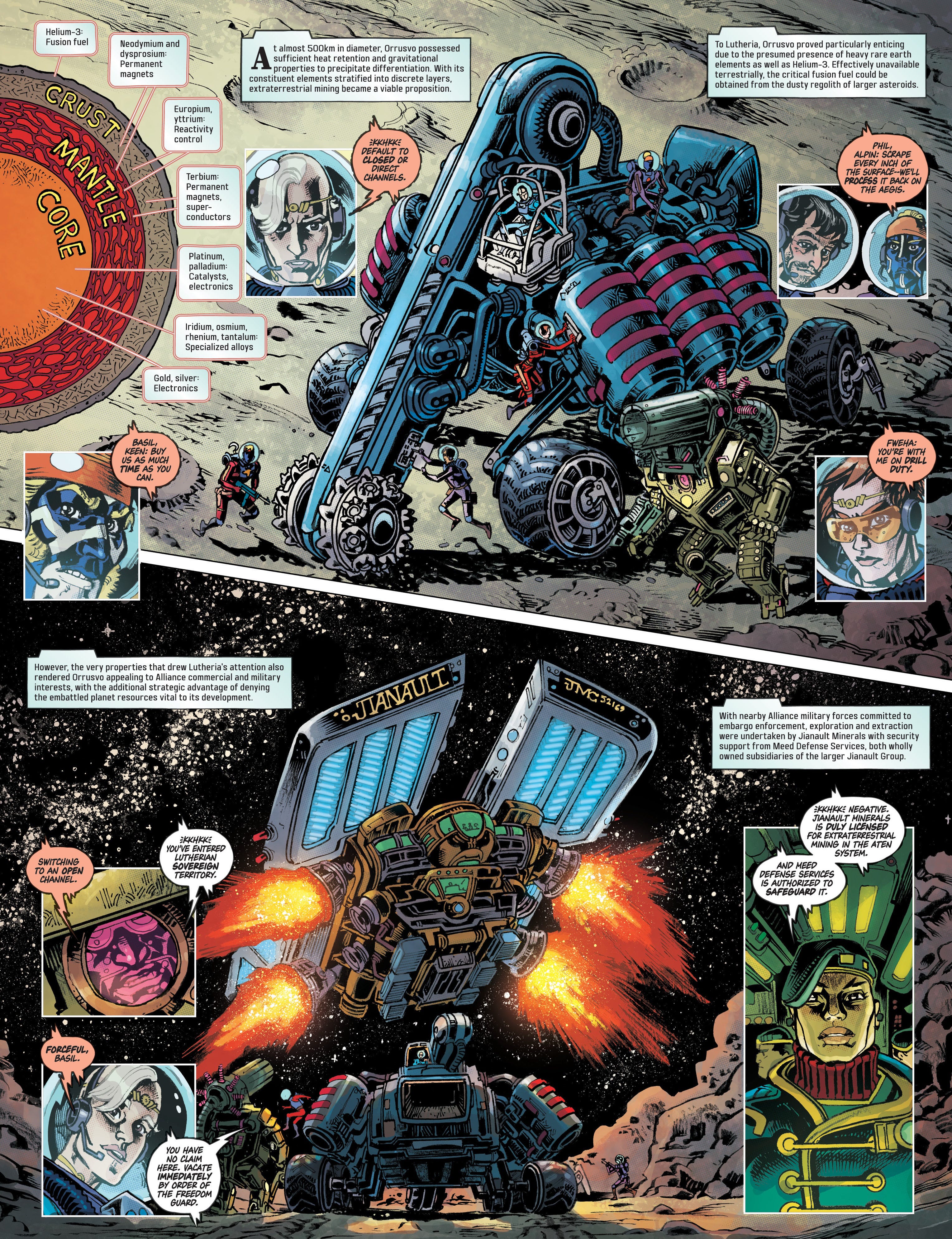
OLIVER BATEMAN: I understood that intuitively better as a kid than I do now. Of course Thor’s big monologue while smashing somebody isn’t happening simultaneously. It’s there on the page, and I’m going to supply the sequencing, because it’s a frame. The time could be around the frame. Scott McCloud’s Understanding Comics does a pretty good job getting into some of that. And I was reading Yoshihiro Tatsumi’s A Drifting Life recently, where he talks about realizing in the late fifties and early sixties that Western comics did this, the punch and then the dialogue right there, and about upsetting older manga creators by moving with other people toward movie-style pacing, lots of frames with no talking. The older creators criticized that on the same grounds. Do you really think readers don’t realize this is all happening? We’re not depicting a static moment. So you can see the transition away from it as corny and old, but I’m now back at the same point you are. If Jim Starlin needs to pack a lot of stuff into those Warlock layouts, and I read that again recently, he’s got to pack it in. His layouts are very creative.
SITTERSON: It’s distressing to me, honestly, looking around at how many comics are written like storyboards. I’ve seen comics where the first page is zooming in on a town.
OLIVER BATEMAN: Yeah.
SITTERSON: That happens all the time, and the reason people do it is they saw Twin Peaks or whatever movie does that, and there’s a bazillion of them, and they think, oh, this is how we create drama, this is how we introduce the world. If you’re writing a film, sure, because there’s motion and you can do it quickly. But in a comic that’s twenty pages, that page is five percent of your issue. It’s a significant component of your issue that you’re not using for much of anything. And this is ironic and silly-sounding coming from a comics writer, but I think it’s indicative of the too-privileged position the comics culture and industry have given to writers. It’s the thing I was talking about earlier, this worship of story.
OLIVER BATEMAN: That’s a big thing from the 2000s on.
SITTERSON: “We make great stories. Everything starts with a great story, and once we have a great story, then we get the artist involved.” For my money, bro, if I want a good story, I’ll read a novel. I’m an adult with a functioning brain. If I want a really, really good story, that’s what I’ll do. Likewise, if I want fast-paced action, I’ll watch a movie. It’s flat-out better. The medium’s better at it. So then the question becomes, what is comics good at? And what comics is good at is a presentation of meaning derived from proximity. It’s a base, silly understanding of comics to say it’s art and it’s words, it’s pictures and dialogue together, and that’s what you get. That’s what you get with shitty comics. That’s what you get with lazy storyboard comics. What you get from good comics is interaction between the two, based on where they are in proximity to one another. I was talking to a friend who came to comics as an adult. He’s not a superhero guy, he’s been adamantly against superheroes, but he’s reading Watchmen for the first time and it knocked him on his ass. What Alan Moore does is very simple. There are captions doing one narrative, and there are images and dialogue doing another, and those two things interact in varying ways throughout the entire book. Then it gets broader once you start thinking about the stories within the story and the interstitial elements between the chapters. That’s a simple thing, but to me that’s the magic of comics. That’s what makes it a valuable and robust and exciting medium. If all you’re doing is writing a story and breaking it into twenty pages with an average of four and a half panels per page in a way the artist will have an easy time drawing, that’s fine. There’s nothing wrong with it. But it’s not using the medium to its full extent.
OLIVER BATEMAN: And you have the chops to do just a big action comic. You did Street Fighter x G.I. Joe, which was a pure fight. I always bring that up as a good, pure-on-its-terms book. No One Left to Fight has a lot of depth, yet at at its heart it’s a Dragonball Z fight story built around fighting, a little more decompressed. And I want to plug this for anybody listening: The Comic Book Story of Professional Wrestling is still probably the best one-volume wrestling history somebody could get.
SITTERSON: Is there another one?
OLIVER BATEMAN: There’s the Scott Beekman book, which is two hundred pages of straight text. And you use the comic in the same way: here’s a territorial map that suddenly contains all this information, here’s another use of the page. You were working with Chris Moreno there, and you’re getting eight pages’ worth of material on some of those pages. And you’re very careful about wrestling, because you hosted a wrestling show, you know that world. So the result is this quite complicated book that looks like it should be simple. People hear “the comic book history of” something and think that means cartoony, silly. No, it’s really quite dense. And Free Planet is a version of that, where there’s a lot of density but it’s design density, and by the end you see the interstitial material, the histories of the world from different characters, mainly from one character, and it unfolds slowly and goes back in time as you go. By issue fourteen, and really by issues seven and eight, which aren’t in this collection, I’m guessing for space reasons?
SITTERSON: They’re an interlude. Publishing-wise, they existed so Jed could stay on schedule. You can see the work on the page. Jed takes longer than a month to draw a book, which means if you’re doing a monthly book, you run out of time. There’s the main Lutheria storyline with the Freedom Guard, and that was ideated as its own thing. I did not want another artist coming in on that, A, because I thought it would break up the flow, and B, because it would have been a logistical nightmare keeping reference consistent across two artists. So we used the interlude to explore different aspects of the broader world. They’re thematically linked, and we designed them to be two very different things, but they’re not in the collections because we wanted the collections to be purely the Freedom Guard story.
OLIVER BATEMAN: But the end result, including those two installments, which are essential, is something that I, as a historian, had always wanted from a domestic book. The visual-novel series and anime Legend of the Galactic Heroes did a similar thing with ideologies and competing empires, but from a Japanese perspective and without as many of these things inside it. Here, every character has a set of complications built in that emerge within the limits of what you can have them say. By the end there’s this fully realized world behind the story, and as a reader I’m kind of glad I only got X amount. I have to think about what will happen with, say, Jackson Crater, the character you deny looks like you. It’s clearly you, man. You don’t have the mustache anymore, but that character clearly looks like you.
SITTERSON: Crater. No. Jed did design Crater to look like me. The one people accuse me of is Oliver Gracchon [not named after Oliver Bateman, by the way], because people see a mustache and that’s it.
OLIVER BATEMAN: Okay, so anyone with a mustache, yes, all mustaches are the same. That’s why my X handle is MoustacheClubUS, by the way. But the Jackson Crater character clearly looks like you and apparently becomes, by the end, and I’m reading between the lines, some sort of cruel leader. We don’t know quite what happened. Robespierre on that planet, potentially, or maybe a Trotsky, but definitely purging some people, which makes him interesting. All the characters have these built-in alignments, as a role-playing fan I notice that, but it’s not RPG nonsense, because you provide a bibliography. What interested you as someone who’s always been interested in politics and political history is in there, and the characters stand in for it. As a nerd consuming this, I enjoy it from that angle. And at the end you’re left to think. The IDA, the big conglomerate empire, has very few redeeming characteristics, though its competitor, the Orouran Empire, comes off looking pretty nice in some ways. We don’t know their intentions, but it’s a meritocracy of a kind. And Lutheria is interesting because there are competing definitions of freedom, the union activity on Dumuzid, the other planet with all the grain. But maybe IDA has some redeeming value.
SITTERSON: There’s the apologia. Dr. Foyroushi wrote the apologia for IDA.
OLIVER BATEMAN: It’s very effective at incorporating worlds, making money, and innovating.
SITTERSON: That’s the thing with the interludes. Issue seven is all about what they call expansion protocols.
OLIVER BATEMAN: Those are my two favorite issues.
SITTERSON: That’s so interesting.
OLIVER BATEMAN: Because it’s pure nerd fodder. Well-designed, but pure lore, for somebody who was reading loads of lore as a kid.
SITTERSON: You read the IDA one. My intent was to make it ambivalent, a little ambiguous and complicated in terms of, well, is it better or not? The people are healthier and safer, it’s peaceful, they have all this technology and better medicine, and there are no more food shortages. But they’re deprived of liberty. My intent, Oliver, really was not to provide answers. Not to say, oh, this is the right way to do things. Because by issue nine, people on Lutheria are starving to death. The cover of issue nine says “free to starve,” right on the front. Which cuts to part of these questions. Everybody wants to be free, but what are they talking about, freedom from things or freedom to do things? Who knows. The answer is yes. The answer is all of it, and everybody has a different definition. It’s rewarding to hear you talk about the characters that way, because a lot of work went into making sure that rather than “here’s the democratic socialist, and over here’s the Trotskyist,” they’re characters with messy loadouts of opinions and beliefs based on their factional relationships. That’s the meat of it for me. The window dressing, the beautiful shellacking, is the big sci-fi action and spaceship battles. The meat of Free Planet is eight or nine people sitting in a room bickering about what their society should actually look like.
OLIVER BATEMAN: With no narrative clarity as to who’s best. That’s what I want from a political story. That’s why I push Legend of the Galactic Heroes on people. The question is never resolved: a democratic corporate state, or an authoritarian merit-based empire with an actual aristocracy that rewards talent and performance? Which is better? We don’t know. And here it’s the same question. You have a few spokespeople for pure freedom, the nomadic life, being able to dissolve your tribe and go away. All of these things packed into a soap opera, and a lot behind the soap opera. People who listen to this channel often came here for the politics, and if they went in, it’s shocking how much is there. You provide the bibliography at the end and on your Substack. There’s no need to do that if you’re writing a Batman book. It was totally voluntary. You did much more work than you needed to.
There are things in my mind where I say, I’m going to give this an hour, this is three hours, I’ll work on this for a week, whether it’s work work or freelance. But something like this, you want to get it right, because when it’s done it’s going to be designed like this almost in perpetuity. It’ll be behind the cover and locked in. And it was a lot of work. While working a job. I can’t believe you did it.
SITTERSON: It’s an enormous amount of work. I think about your “doing the work” thing a lot, and one of the things I like about it is that it works on both levels. It’s not ironic, exactly, but it works on an honest level and there’s an ironic sense to it as well. I wanted to do the work, man. I’ve been doing comics for a really long time, and I got to a place where I knew I was not going to have the opportunity to make a living doing comics. That window’s closed for me. I have theories about when, but who can say. It no longer looked like a needle I could thread. So doing the type of work we were discussing earlier, easy, fast, easily marketed and reproduced, drawable by fucking anybody, doesn’t appeal to me anymore. It appealed to me when I thought I could make a living writing comic books, because there’s no work I like doing except writing comic books. That’s it. Everything else I just suffer through. But writing comic books is a joy. I thought, if I can find a way to do this sustainably, great, I’ll do comics that way. And that stopped being an option, but I still wanted to make comics. So the question became, how do I make the best comics I’d be most proud of? Because truthfully I don’t know how many more of these I have in me. It’s so much work for so little payoff. How do I make something I’ll be proud of, that I could walk away from if I never made another comic again?
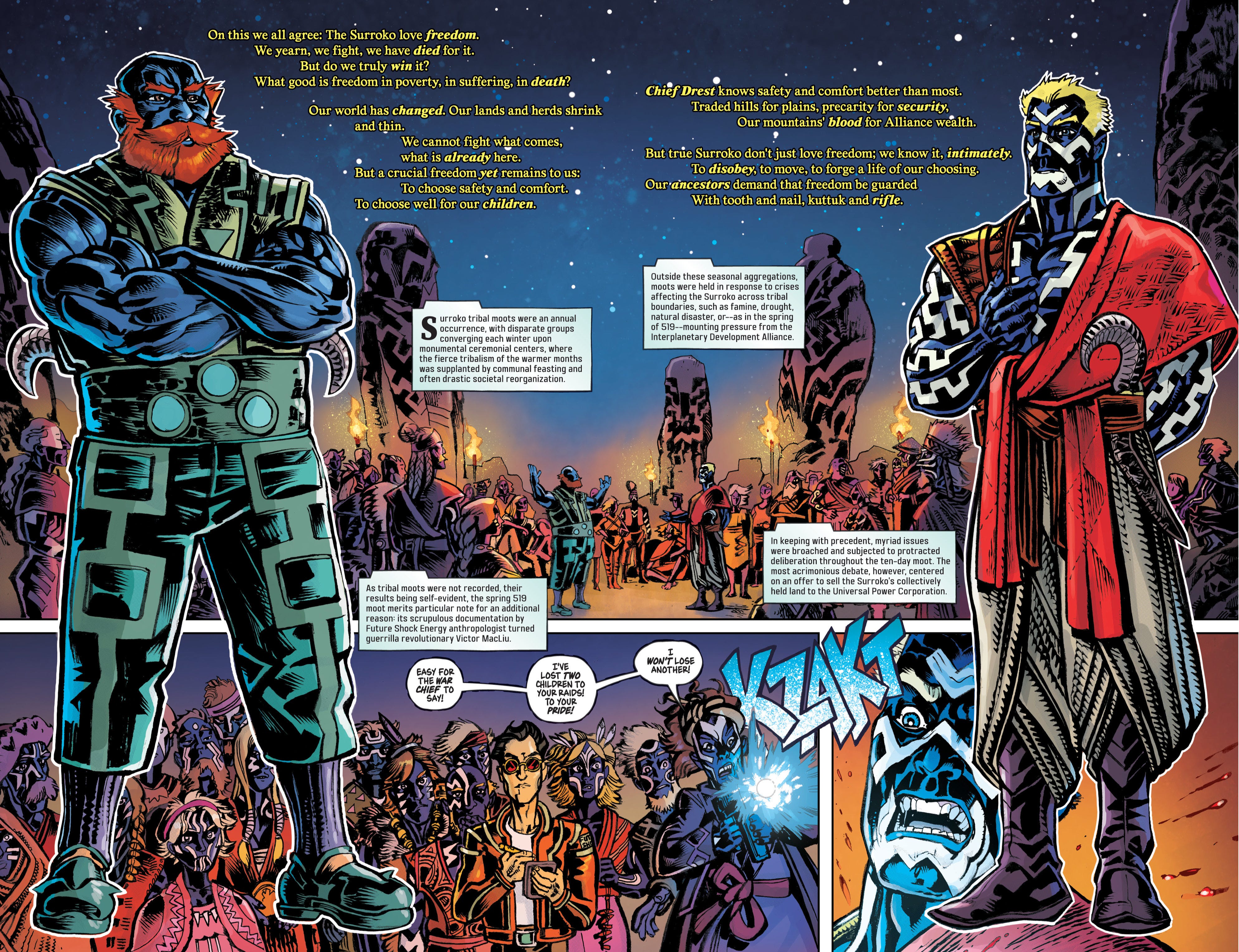
Free Planet’s a good note to go out on. It captures everything that interests me about comics. It tries to do everything: action, soap opera, geopolitics, design. And to do that, I didn’t know any other way except, and you’ll like this. Years ago, probably 2013, Stone Cold Steve Austin had just started his podcast, and on one of the very early episodes he had Kurt Angle on. I’m sure I’ve yammered at you about this before. Kurt Angle won the Olympic gold medal with a broken neck, and he talked about going into the Olympics knowing he wasn’t the best wrestler in the world. But what he could do was outwork everybody. He could work on his conditioning, run up every staircase in whatever arena he was training in, and outlast his opponent. He could do more work than they could. And for me, that’s what Free Planet was. Doing everything, considering everything. I didn’t color it, I didn’t letter it, but we were intimately involved with every choice. We were relentless, monstrous micromanagers to poor Vittorio and Taylor. And even with Jed, I didn’t micromanage Jed, but I’ve shown you my thumbnails.
OLIVER BATEMAN: You have much more of a visual conception than I could have imagined. I assumed it came from being trained in the Marvel method as an editor.
SITTERSON: This doesn’t come from Marvel, man. They didn’t like this at Marvel.
OLIVER BATEMAN: Where did it originate?
SITTERSON: From asking, how do I make good comics? How do I make the comics that excite me? Because I do really love comics, but this is the curse of getting older: there are fewer and fewer comics that I actually enjoy, that are worth a shit. So I look at the ones that are and think about how to achieve that. There was an immense amount of work in the research, in figuring out all these interlocking character arcs and how they fit into a twelve-issue thing, and in writing all those captions, learning to write in the voice of the future historian, Dr. Foyroushi. That’s not a way I write.
OLIVER BATEMAN: And you read a lot of histories in prep for it.
SITTERSON: Of course. And I lifted a lot. But then there’s this other level of work and control, the most fundamental and the most time-consuming, which is doing thumbnails before I script, and ideating an issue not as “here’s my outline, here’s all the stuff that has to fit into issue nine, let’s get after it.” I know the broad beats. But instead of breaking those down into scenes that go into X pages, I sit down and ask, what’s the most visual way we can display this? What can we do to make sure that every time you turn the page there’s something overwhelming and rich and complex and honestly different? I wanted to do something different every time out, so I tried not to lean on the same page layouts unless it was a specific choice to evoke something from earlier. And that was outrageously time-consuming. I would spend a week or two sometimes just figuring out page layouts before I started scripting an issue. That’s unheard of. If you’re talking about people who write comics professionally, that’s absurd, because to make a decent living you realistically need to be doing four work-for-hire books a month. And if you’re smart, you’re also trying to get your own creator-owned stuff going, because work-for-hire is short money. If you want a retirement fund, and something to do once the company employing you gets tired of you and kicks you out the door for somebody newer and cheaper, you also need to be standing up these creator-owned things, which are way more work because you’re creating everything, as opposed to writing a Superman-in-Metropolis story where all the characters already exist. So the amount of time I spent on a single issue of Free Planet is absolutely demented. And it wouldn’t be possible if I didn’t have a day job. It simply wouldn’t be.
OLIVER BATEMAN: I think that’s a good lesson. For me, moving from one day job to another, I’ve done tons of outside work over the past ten or eleven years on top of whatever else I was doing, and there’s part of me that says, at this next level, at some point I’m going to say to myself, it’s got to be the piece everybody has wanted me to do for a long time, which is the story of my dad through his words and my words. People who’ve read chunks of that have wanted it. Publishers haven’t. It’s been pitched by an agent and they didn’t want it. I don’t care. I’m at that stage, and I think everybody listening gets to that moment when you’re comfortable and you have something going on and you can give something else that extra time. It might as well be a thing like you did here, where you go all out, and when it’s done you can say, I did it, this was a quality project. Taste is subjective, people can review it however they want, but I controlled everything I could control. This is the best I could do. And most likely what sustains you isn’t going to be the great artistic feat. It’ll be something else.
SITTERSON: I say this mostly for my own benefit, because it’s a thing I have to constantly remind myself. It’s exceedingly rare for somebody to make a living doing creative work. But it’s even rarer for that person to be doing the creative work they want to do, much less the work they’re proud of. Get any creator in any medium alone in a bar after a few drinks and cozy up to them, and it won’t take much to get them talking about how they’re not really doing what they want to be doing. That’s a tough pill to swallow. It’s not something I’ve fully internalized, or internalized at all. It still frustrates me. It drives me nuts. But especially in the current context, we’re fortunate to have any opportunity to do idiosyncratic, weird, specific work with an identifiable voice. And Free Planet’s weird, man. I don’t think it’s weird. I think it’s what everybody wants. It’s soap opera drama, it’s big military action, it’s complex ideas. It’s certainly what I want. But it couldn’t be more different from what’s on the racks and what typically sells. I don’t know what my point is. At least it’s out there.
OLIVER BATEMAN: It exists, man. And I think you got it. This is what doing these shows and maintaining the Substack is about. It’s some extra income for me, but mainly it’s to talk about work in a variety of ways, this variable nature of the word. There’s the work, and that’s your day job. Maybe you’re drafting or writing something that’s not what you want, but it’s sort of in your field and you do it. Then there’s the work, which is, say, a creator who made up his entire memoir and whose whole persona is fake, and I give him a thumbs up and say, keep doing the work, man, killing it. And then there’s the work, the career-fulfilling, life-fulfilling stuff that occasionally comes down the line. Even with a short essay where I really got to put time into it, it comes off the line and I think, oh, this was actually the work. It wasn’t the quickie work or the work-for-hire. It was pretty good, or at least I’m happy with it. Usually those are my least popular things. The more I like it, the worse it fares. But there are those levels to the work. We all have to do the work. Some of us who are good at hustling could do the work in the sense of running a hustle or a shave or a game. And the highest form, the top of the hierarchy, is being able to do the work where, as my dad would say, he always wished he’d had a job where you could go to sleep at night feeling proud of the thing you did that day. That’s not always the case, but we’re all navigating those worlds of work. So I’m glad that with this project you at least maybe, hopefully, didn’t put a pin in it. Maybe there’ll be more. But you know how time-consuming it is. I don’t know if you want there to be more. Maybe you’re enjoying right now just working on your work work, your day work.4
SITTERSON: It’s been a weird thing getting used to not having it. It’s been years. Free Planet was only on stands for fourteen months, but there were years going into that, building it up, figuring out what it was going to be, breaking the story, and ramping up so we had enough in the tank to launch and come out monthly. We have an invitation. Eric Stephenson, the publisher at Image, told us that if we come back, they’ll relaunch it with a new number one. So we’ve got an open door. But I think Jed and I both need at least a little bit of a break right now. This is the thing I keep coming back to. It’s a different way of doing comics. It’s slow-burn comics, it’s auteur comics, it’s not assembly-line comics, and the downside of that is I need a little more time. I don’t have the juice to jump into another one immediately. And I don’t think I’d want to, because after doing something like Free Planet, the bar for me is a lot higher. I don’t want to go back to doing easy comics.
OLIVER BATEMAN: You did them already.
SITTERSON: I did them. I’ve done those and I’m proud of them, and I had a really good time doing them. But now, if I’m going to do a comic, it won’t necessarily be exactly like Free Planet, because I’d try to find a way to move a little faster through it, but it won’t be less ambitious than Free Planet, certainly. I don’t see any point in doing it otherwise.
OLIVER BATEMAN: For anybody listening and thinking about work, as your own work progresses, that ultimately is the goal: to get to a point where you can say, of my serious projects that give meaning to my life, this is the bar, and I’ve got to take this amount of time, and I know I only have time for so many more of them, but I’m going to do them this way. I’m certainly at that point. I’ll take a magazine piece that’ll sit for a couple of months, and I let it percolate. I have a few things that are quick turns, but increasingly, after fifteen years, the quick turns are just fine, and you’ve got to move into the things that will have some staying power, and you want it to be finished work. You could go back and do five thousand more G.I. Joe issues if you needed to, I guess.
SITTERSON: I don’t know if they’d have me. That’s the thing I have to internalize and think about a lot. For a very, very long time, I wanted to be one of these guys. I wanted to be one of these working comic book creators, bouncing around Marvel and DC doing the work-for-hire stuff but also launching creator-owned things. It was never my job, never where I made my money, always one of a dozen side things I did. And if I’m being honest with myself, if I’d ever gotten those types of opportunities, I probably would have blown it, because I wouldn’t have wanted to relinquish the required amount of control. I would have wanted to make the comic I wanted to make. I got a little taste of that on G.I. Joe, butting heads with people, because I had a vision for a thing but it wasn’t mine. It was Hasbro’s, and it was IDW’s. I was a hired hand. And I think that’s even more the case now. Realistically, the type of work I could do at one of these places, that they might conceivably hire me for, I wouldn’t want. I wouldn’t want to do the one-shot tie-in to the big event comic, or the backups that tell you something about a character from another book to fill in continuity bullshit. I want to do what I want to do, and that’s a tough road to travel, man.
OLIVER BATEMAN: Wanting to do the work you want to do is a challenge. I thought in my twenties that what I wanted most was to get a tenure-track job and be a history professor. I did those things. And two years in, I realized I was butting heads with everybody. What I thought that job would be was some 1960s version of the job my advisor had. To write books at the rate I’d want to write them, I need ten or twelve years to do an appropriate job on a historical monograph. To do a great book takes a long time. And there was this move toward assembly-line production and then assembly-line teaching, and it’s like comics. Everybody wants that job. You know this from the con world. A lot of people who go there want to be in comics, want to be pros. A lot of people who go to grad school want to be tenure-track professors. Then you get to a part of it and see it, and it feels, maybe coming from a place of privilege, as they’d say, to say I don’t want to do that. I did it and I don’t want to do it. For my dad, it was playing college football, being a top recruit. He did that, and three years in he hates it. I was there. I achieved what I thought was my dream, and I didn’t want it. Did you realize you don’t want it the way it’s going to be?
SITTERSON: You hit the nail on the head. I didn’t want to be a professional comic book writer. That’s not what I wanted. I wanted to make the comics I wanted to make, and I wanted that to allow me to be a pro comic book writer. And that’s just not how it works, especially not now. It’s always been a rarity in any medium. You don’t get to be Captain Beefheart or Frank Zappa, coming in doing whatever weirdo thing you want and then, oh, you got a career out of it. That doesn’t happen anymore, and it happens less by the day. People talk about, oh, it’s art, it’s not a competition. It’s a zero-sum game. There are only so many jobs. And when you’re competing against people who only really want to be in that spot, people whose peak aspiration is to be working on somebody else’s farm, you can’t compete against those people. This is a thing I think both of us have run into: not recognizing that your job isn’t your job. Your job is to make your boss happy.
OLIVER BATEMAN: Oh, yeah. Cross all the t’s, dot all the i’s.
SITTERSON: That’s something I’ve never been able to wrap my brain around in comics, because I care about them. My goal isn’t just to maintain a position in comics. If that were the case, I never would have left Marvel. Marvel Comics was my first job out of college. I would have just stayed there. But that wasn’t what I wanted to be doing. I wanted to make my own shit. And that’s a desire that’s at odds with actually finding success doing it. Kind of ironic.
OLIVER BATEMAN: Anybody listening who’s thinking about work knows this. There are going to be some people in that category who want to do their own thing, and that’s a hard road. I have found that the only job where I have consistently gotten good evaluations is in the corporate world, where I’m producing for a boss on something I do not care about except as a perpetuation of my role so that I can do my other creative stuff. That doesn’t mean I don’t do it effectively. It probably means I do it more effectively, the way a 1950s ad man who really wanted to be a novelist would. I didn’t realize that was even a possibility. It’s a fortunate thing. But it’s preferable to being in a role where you have such bad faith and you’re up against, like you said, the happy-to-be-here types. Wanting to be a big-time novelist or a comics pro or a magazine writer, any of those things, it’s academic. There were and still are people coming up who, at some level, have been so ruthlessly optimized they might as well be AIs. They were AIs before AIs. They were small language models. You saw them emerging in the 2000s and 2010s, optimized to write Batman, or to write the generic literary thing. Comics is really bad about this.
SITTERSON: Comics is really bad about this, because again, the pace and the small margins. You have to develop this shorthand, this easy way. You have to figure out what your story is, the thing that’s marketable enough that you can crank out over and over again. It’s distressing, man.
OLIVER BATEMAN: And it’s perfect for small language models, the ones who were there before the AIs and trained the AIs with their content. We visited with our friend Nate McDonough, who does the fantastic Grixly, and we talked about what it would have been like to be Tom DeFalco, presiding over a vast amount of production at Marvel, this bearded guy churning them out with every shortcut in the book. Could I have done that? Would that have been fun? If I didn’t like comics, it might have been a fun role. Give me some Venom in that one.
SITTERSON: Have I ever told you about the moment when I knew I needed to leave Marvel as an editor?
OLIVER BATEMAN: No.
SITTERSON: I’m not going to say the name of the book, because I’m not that self-destructive. But there was a book that was dreadful. The script was awful, but it was behind, so we had to send it right out to the artist, and they drew it really, really quickly and it was lousy, and we got the cheapest, most available colorist and letterer on it. Everything was hacked out. It was true assembly-line comics. We had to get it out because we had solicited it and it needed to be in stores as part of our publishing plan to make our numbers that month. When the lettering came in, and for people who are deep in the weeds, lettering is its own discipline, the script is written, then it’s drawn, then colored, then lettered on top of the artwork, I went through it and thought, this doesn’t make any fucking sense. Bad doesn’t cover it. And I rewrote it. I moved pages around, rewrote dialogue, edited captions, and made it make sense, made it at least a barely competent comic. And we sent it out, and I realized that was the most impact I would ever have on a book as an editor. I was never going to make a bad book good. It’s impossible to make a good book great. But I could make an unreadable book merely terrible. That was crushing, man. I was twenty-three, maybe, and I thought, oh my God, this is it. This is the most impact I’ll ever have on a book.
OLIVER BATEMAN: I’ve got to get out of here. Imagine the guys who were the kings of that.
SITTERSON: It’s not that they don’t love comics. They love it in a different way. For them it’s the love of the game, the involvement with comics, being there, being at Marvel, working on those characters and that history, the proximity to creators. That was never it for me, man. I didn’t get starstruck. It wasn’t rewarding for me to meet and work with Chris Claremont.
OLIVER BATEMAN: He’s great. He’s really important.
SITTERSON: I revere Chris Claremont. I don’t think he gets enough credit for how influential he is.
OLIVER BATEMAN: Another guy who did great soap opera. A hundred percent pure distilled spandex soap opera.
SITTERSON: There’s a lot of Claremont in Free Planet. An excessive amount, really. But I didn’t get fawning-fan about it, because I wanted to be him. I wanted to be doing that. That’s why I was there. And I think that’s different from a lot of people. A lot of folks just want the proximity, as opposed to the desire to do a specific thing.
OLIVER BATEMAN: And you’ll never compete. I realized that in academia. You’ll never compete with someone who genuinely likes writing their CV, or filling out forms, or submitting things. If they like it and you don’t, and there’s nothing wrong with that, to each their own, but if you’re up against that, they will beat you. You need to be in another field where you can put your skills to better use. And the corporate world, for people listening, can offer that sometimes, because no one likes a lot of the things a corporation does. By virtue of having skills you can use, you might occupy a really valuable role in a corporation where no one understands the product and you might be the one who understands it the most, even though no one understands it. That’s the one detachment.
SITTERSON: The detachment’s really important for me too. For all that Marx says about being alienated from your labor, it ain’t all bad. It’s kind of good sometimes. It certainly didn’t serve me well in comics, in terms of career, but it served me well in terms of making the art I want to make. If you look at the books I’ve done, they are unabashedly me. They’re idiosyncratic, they’re specific, they have a voice, and I’m really, really proud of that. I work with very specific types of artists. That’s not the case for many of my peers, especially the ones who’ve had way more success than I have. They have much bigger bookshelves, they’re much better known, but the work is not as purely theirs. They care about it, but they’re able to dissemble. That’s a word Given uses a lot, so I’m trying to.
OLIVER BATEMAN: Dissembling is essential to a truly professional life in one of these disciplines. Believing while you dissemble is even more important, or somehow reaching the point where it’s not even clear. You can go out there and give a pitch for your creator-owned book, Manhunter 32, soon to be on Amazon Prime, whatever, and then fart out another one and another one.
SITTERSON: I have a hard time dissembling with comics.
OLIVER BATEMAN: You like the form too much.
SITTERSON: I’m too close to it. I care about it too much. Which sounds like a humblebrag, but it’s been a detriment. It’s made finding comic book success and getting more work out there more difficult, just by virtue of caring about it too much and being unable to just do the work, you know?
OLIVER BATEMAN: If you could do the work in that sense, you could take some of the skills you use in other areas and say, okay, we need this type of protagonist, this is hot right now, we need this type of story, and we did some focus groups and this is the visual format they like, these are the colors people like, so let’s bang it out.
SITTERSON: And the tough thing with comics is that even if you do all that, there’s still very, very little chance of it doing well, because the margins are so small and there’s such a glut of content. So I’d sooner do nothing. That’s the truth, man. I would sooner not do comics than do comics I’m not excited about, because it’s too much work. Even if I were to dissemble, that’s work. That’s a lot of effort to put into something I don’t give a shit about.
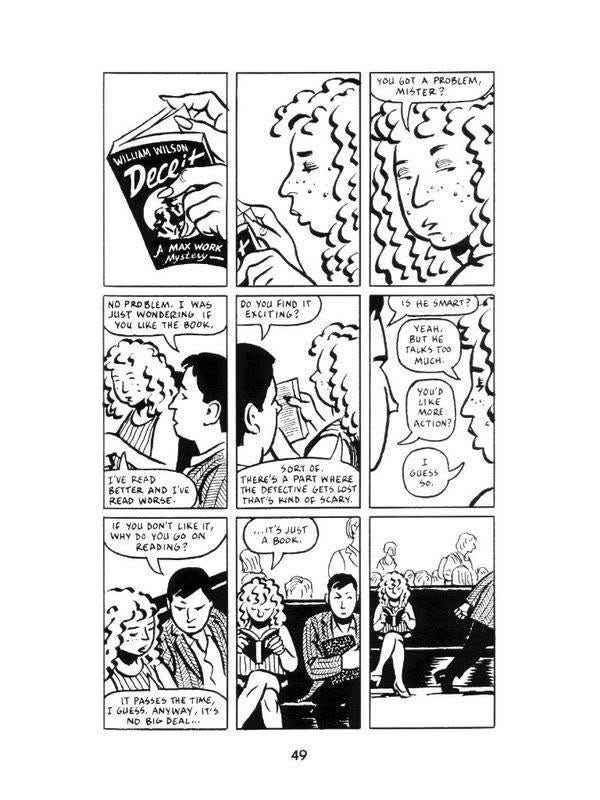
OLIVER BATEMAN: Sometimes, out of curiosity or boredom, I’ll see someone with a popular comic or a potboiler and ask them questions about it just to make conversation. Do you like this book? Do you like this story? And it’s like that series of panels from Paul Karasik and David Mazzucchelli’s adaptation of City of Glass, which is phenomenal, where the main character, a detective novelist, comes across a woman reading one of his books. Do you like this character? He’s okay. What’s the problem with him? He talks too much. What do you think of the book? It’s okay. Why are you reading it if it’s just okay? Passes the time. And you have to realize, okay. If I cared about it less, I could do that. I could dissemble in some way and convince myself that what I’m doing is important.
SITTERSON: What it comes down to is there are easier ways to make money than writing comic books.
OLIVER BATEMAN: Hell, you can make 250 grand a year as an In-N-Out manager.5
SITTERSON: If your concern is solely to make dough, don’t do comics. It’s a bizarre thing to me, to approach something like comics, where there’s so little money in it, in a mercenary fashion. Maybe that’s part of my problem too.
OLIVER BATEMAN: You see this in bodybuilding. You go to the Arnold Classic and guys will say, my dream is to be inside the booth, not outside it. Same as the guy at Comic-Con who wants to sit at the booth rather than come to the booth. “I want to be a pro this year.” I talked to guys there for an article and asked, you’re not competing? And the guy says, yeah, but I want people to think I compete. Half the people here look like they compete, and they’re probably all thinking that. I talked to a marketing woman at Optimum, which makes whey, and she came up with the idea in 2017, and I did a story on it for Vice, where they let people pay to stand in the booth. They had to win a contest first to become a sponsored athlete, but then they could pay their way into the booth at the Arnold or the Olympia.
SITTERSON: There are people who do that in comics. They self-publish their own stuff, or they put it up on Kickstarter, and then they pay a con to rent a table and go sit there all weekend and sell.
OLIVER BATEMAN: I have a buddy I went to high school with who’s done that a couple of times.
SITTERSON: He’s a pro. It’s shifting goalposts. There was a time for me when it was, if I could just get invited to a con. If I could just have a creator-owned book. If I could just have an Image book. If I could just do an Image ongoing. It’s never enough. Nothing is.
Free Planet is a fine piece of work, and both volumes are out. Snag the two interlude issues too, if you can find them. Aubrey says you won’t miss anything without them, which I suppose is true, and also that they’re a fun thing to track down, which is truer.
Suggested reading
Free Planet, Vol. 1 (issues 1-6) and Vol. 2 (issues 9-14), Image Comics
Free Planet #7 (art by Ilias Kyriazis) and #8 (art by Tyrell Cannon), the Expansion Protocols interludes
Atlantis Still Sunk, Aubrey’s Substack, including his excellent Free Planet bibliography posts
The Comic Book Story of Professional Wrestling, Aubrey Sitterson and Chris Moreno, Ten Speed Press, 2018
Oliver’s MEL features on No One Left to Fight and BEEF BROS
The Work of Comics (2020) and The Work of Comics, Part 2 (2025), Aubrey’s prior appearances
The Work of Comics, Part 4 (w/ Jesse Moynihan), for the Cerebus conversation
The Work of Fantasy, Science Fiction, and Fact, my essay on Free Planet’s approach
The Work of Tenure, on the academic version of the “your job is to make your boss happy” problem
The Work of My Father, on the book that publishers didn’t want
Scott McCloud, Understanding Comics; Yoshihiro Tatsumi, A Drifting Life; Paul Karasik and David Mazzucchelli, the City of Glass adaptation
Legend of the Galactic Heroes, which I push on everyone6
As always, I am obligated to note that I use AI to edit these transcripts and add the hyperlinks, though the infallible Pangram regards them as 100% human (or close to it, likely owing to the fact that this is a recap of human speech, not watermark-satisfying cryptographically-constructed diction).
You can read that entire magnificent work of art for free on the Internet Archive.
Retailer orders on Absolute Batman have run close to 300,000 print copies per issue, and by this summer Scott Snyder was claiming half a million on individual issues. Whether “copies” means anything when a single issue ships with two dozen variant covers and an eleventh printing is a question best put to those diehards who buy them slabbed.
This was my favorite part of the conversation!
CNBC had the average at $160,000 back in 2018, and more recent reporting puts the starting figure for new store managers north of $187,000, though my own customer-facing work at the job I’m leaving effective today — for another, even better job, thank the fates! — has made me aware that the California average, the company’s home base, is actually around $275,000 (though relative to the cost of living, I suppose that’s the same as $187,000 in the Metroplex). Either way, the manager of the Double-Double line clears more than any comics writer I know, and the fries are fresh-cut.
Series writer Yoshiki Tanaka, who is only 73 years old, recently had a severe stroke and is basically out of commission. So it goes! The entire anime, which is incredible, can be watched in full at the Internet Archive.


