


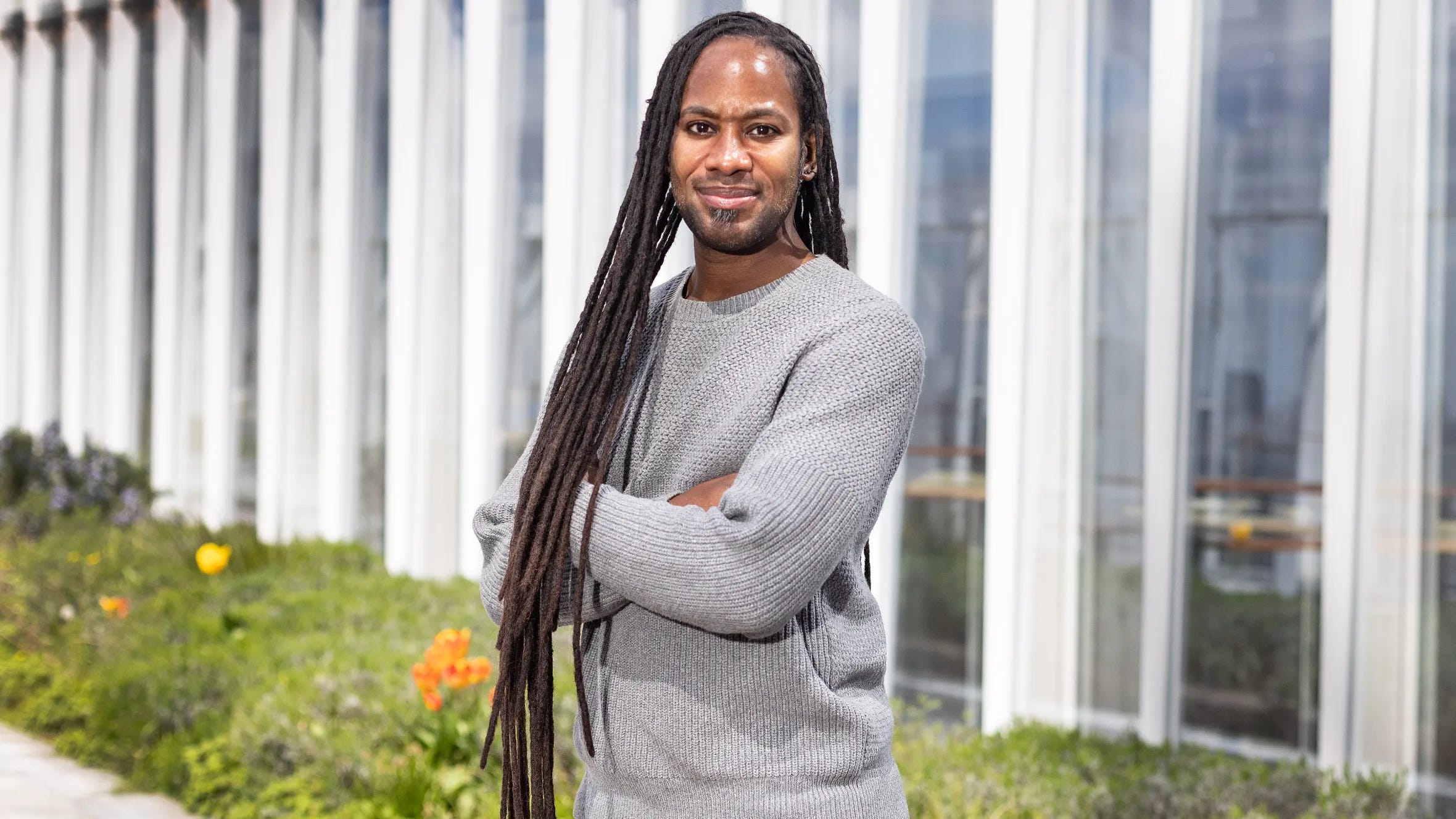
Justin Smith-Ruiu (pronounced ROO YOO) is a professor of history and philosophy of science at the Université Paris Cité and the Founding Editor of The Hinternet, which remains, as I pointed out in the notes to his last appearance on the program, the one Substack to subscribe to if you subscribe to only one (that isn’t this one). He is the author of The Internet Is Not What You Think It Is (Princeton, 2022) and On Drugs: Psychedelics, Philosophy, and the Nature of Reality (Norton, 2025), with two projects on the way: The Philosopher and the Tsar: Leibniz, Russia, and the Making of a Scientific Empire, under contract with Princeton University Press (a taste of it is here), and the Oort Cloud Review, Volume 1, Issue 1, a collaborative work of experimental science fiction coming this fall from Hat & Beard Press in Los Angeles, with launch events to follow in LA, the Bay Area, New York, Paris, and elsewhere.
We spoke during a banner month for the subject at hand: the Jason Arday scandal at Cambridge, about which Smith-Ruiu had just published “Fabulous”, and the Ross Barkan affair at New York magazine, which ended days later with the magazine updating 67 columns and dropping him and Penguin Random House halting pre-sales of his forthcoming Mamdani book (he’s a longtime Mamdani confidant, so it’s hard to imagine that there’s much plagiarized material in there…but if so, that would be rather lame).
OLIVER BATEMAN
We’re in a season of plagiarism scandals, and I want to lay out the board before you give me your grand theory. The most obvious one, the one that launched a thousand takes, is the Jason Arday scandal in Great Britain. Then there’s Ross Barkan, “fired” from New York magazine, which is always funny phrasing when the person is a 1099 contract columnist rather than a W2 employee. In his case it was factual sentences copied close to verbatim. Then Claudine Gay at Harvard, who plagiarized chunks of her dissertation, and there’s proud precedent there. I remember reading José Moya’s Cousins and Strangers, about Spanish immigrants in Buenos Aires, and he describes reading old dissertations there from the 1800s and finding that half of them were plagiarized from dissertations written ten years earlier. Somebody just grabbed one and copied it. Everybody plagiarizing, always, especially lit reviews. I didn’t write one for my own dissertation. My advisor said that stuff’s junk, you already did comps, I don’t want to read it.
And I’ll add one you’ll find very interesting. I’m not naming names, but a mentor of mine, somebody I co-bylined with, somebody whose writing gigs paid a down payment on my house many times over, just released a book from one of the big five publishers that is almost assuredly 100 percent AI. Unedited AI. Now, I’m the head of AI content at my current company, so I have no compunction about taking money to humanize and edit and prompt. But a 100 percent AI book! No clean-up work, no fact-checking…yikes!
Yet all this moral scorn gets heaped on these people, and my judgments of them have nothing to do with their plagiarism, because one of the works I’ve most enjoyed in recent years, which you recommended to me, is Robert Burton’s The Anatomy of Melancholy.1 A great toilet book, if you will. And it is essentially a work of creative plagiarism, classical sources dumped together in a very inventive way, and later plagiarized itself by Laurence Sterne (that’s doing the work).
SMITH-RUIU
I’ll give you my grand theory of plagiarism in a second, but let me first say that this is an essential topic for a conversation with you under the heading of the Work, capital W. Your great contribution to history is to have capitalized that word. I find myself constantly thinking about it. I was walking in a park in Paris and there were some crows picking away at a badger carcass, and I thought: they’re doing the Work.
OLIVER BATEMAN
They’re here for it. You love to see it.
SMITH-RUIU
They do. It’s this maximally capacious category that somehow fits everything in a surprising way. But more narrowly, the notion of the Work is essential for thinking about plagiarism in this moment, when all of our output is being funneled, cloaca-like, into a single passage. We no longer have one exit for our real work and another exit for our freely created off-time production, or, dare I use a word I absolutely hate, our hobby work. Whatever you do is your Work, capital W. That’s it. Some people haven’t figured this out yet and are still trying to draw a line between their downtime and their work time, and in between we have this huge gray area nobody knows what to do with. Employers don’t know what to do with the off-color tweets of their employees. Is that extramural speech, or is it speech in your capacity as a professional with responsibilities? All of it is in flux because of our most recent technological revolution.
This matters for the plagiarism crises because our norms for dealing with plagiarism were shaped under a different technological regime. They made sense in the nineteenth and twentieth centuries and they really don’t make sense any longer. Same for copyright, incidentally. For a while it made sense to attach a creative output to an individual and anchor its future use to that legal person. In the new information ecosystem, where we’re all under a constant BitTorrent, as they call it, people are going to take up and recombine and put back out the bits of information in their own recombined ways. That’s only to be expected.
And I’m not excusing academic plagiarism. I have to be clear about this, because I made it very clear in the piece I wrote about the Arday case, and no matter how explicitly I say it, the response is always: why are you excusing academic plagiarism? I’m not. But the rules governing our writerly and scholarly output are anchored to a particular technological era, and they were never anything more than a particular culture’s rules. They’re a lot more like the rule against driving on the left side of the road than like the prohibition on murder. One is close to an anthropological universal; the other flips to the opposite side when you get to the UK or Japan. Look back at previous eras, or at current intellectual cultures other than academia, and you find very different rules. You cited Burton. In late antiquity, everyone wanted to be Aristotle, so people wrote treatises and signed his name, and now we have this whole corpus attributed to pseudo-Aristotle. Who were these people? Why would they efface themselves to pretend to be Aristotle? Because Aristotle was the greatest, and you aspire to be like the greatest, so you sign his name. In painting workshops you imitated the master, not to pass yourself off as the master in a counterfeit way, but by aspiration. The difference between homage and counterfeit is razor thin. All of these are culturally embedded practices, and the idea that there’s some horrific moral transgression here that exists in an absolute way is incredibly naive. So again: relative to the rules currently on file at Cambridge University, you should not plagiarize. Relative to the history of human literacy and expression, all of this is obviously in flux and urgently needs to be reconsidered in a century with a totally different information infrastructure than the one I grew up in.
OLIVER BATEMAN
I think this is the great question of our time, and for people who want something engaging on it, the Orson Welles documentary F for Fake is fantastic. It goes through the forger Elmyr de Hory and his fake Picassos, and the documentary itself contains several fake-out moments and hoaxes. If you can produce five things that pass as Picassos, could you create a whole Picasso period? If you’re as good as Titian, could you create a Titian? Then there are the names that ring out precisely because we don’t know who they were, like pseudo-Dionysius, and maybe the arguments were great enough to last on their own. So maybe these questions about authorship are going to change, or stop mattering. But they did matter for somebody like Claudine Gay, who was plagiarizing at a time when she would have known the rules on attribution. And by the way, I learned from you right before we started recording that Claudine Gay is the first cousin of the writer Roxane Gay.2 I had no idea. Arday would have known the rules too. So people can do their gotcha things. But whatever is happening there is in flux. We’re transitioning, as you might say, to having a cloaca.
And from the time I was a kid, my dad’s favorite writer was William Burroughs, so we would always talk about the cut-ups. He was a guy who loved Thimble Theatre and thirties and forties pop culture and hard-boiled stuff, and he loved seeing that material mashed up into something new. Or you take the same material and self-plagiarize endlessly, like Burroughs did. Everyone pads the CV. Everyone reads the same talk over and over.
SMITH-RUIU
I do this too, in that I’m constantly developing various strands of thought across pieces. I can’t have discrete projects where each time I say something fundamentally unconnected with everything I wrote previously. That’s not humanly possible, and the idea that we shouldn’t work that way is just a particular cultural norm from a particular time and place. I also wanted to mention that over the years there have been accusations that Martin Luther King plagiarized parts of his work, and there have been defenses of him which, the first time I read them, I thought were absurd, but which I now take more seriously. The defense says: he comes from a particular preacherly tradition. You understand sermonizing as joining up with a kind of community lifeblood that is speech. You take your part of it. Maybe he should have been more careful not to carry the norms of the sermon into his Boston University academic context. But even if you agree on that point, and this is similar to the Arday point, you have to recognize that academic norms are just one set of norms for one specific cultural context, and it’s no longer so obvious to me that it’s a more valuable or noble context than being a preacher. In fact, I’m trying more and more to talk like a preacher. I’ve been watching Billy Graham footage on YouTube recently, and the way he talks is absolutely phenomenal. If I start channeling Billy Graham, am I plagiarizing him, or am I just vibing with him, learning from him? It’s impossible to isolate the absolute, context-independent right way of relating to other people’s speech or writing. As I confessed in my Arday piece, for years I used to copy out texts by writers I admired as a way of learning. You don’t want to pass it off as your own. But when you’re living in a BitTorrent environment, it’s not surprising to see some of that copied material get intermixed with some of your own. Lord help me if it ever leaked out into the public. But if it did, at this point I would just say: ah, sorry, whatever, no big deal, let’s move on. And I hope the world would forgive me.
OLIVER BATEMAN
Even now, sometimes just as an exercise, I’ll take a Jimmy Cannon sports column and rewrite every sentence, keeping the same number of sentences, just for the hell of it. Right next to my desk I keep the Library of America volumes of American speeches, and the American sermons volume next to those, and I steal lines from them constantly. Or I don’t even call it stealing. I just use them. Two of my favorite Kennedy speeches are Ted Sorensen speeches. Is there a Kennedy, or is there really just a Sorensen, or is it the interaction between the two? Even the name of this whole enterprise comes from that 1980 Ted Kennedy speech: “the work goes on, the cause endures, the hope still lives, and the dream shall never die.” Which is itself a mashup. Opus Dei is also called “the Work,” so there’s one for the trads. And for the woke, “doing the work” was what people were doing circa 2013, when they would tell me, well, we’re all doing the work of reading this book right now, and I was thinking: I’m also working a job. That polysemy is why I grabbed the word. And coming out of a sales environment with my father, going to the car dealership every day, of course I’m going to reuse words and sentences. In the sermon tradition, the speech tradition, all they do is steal each other’s lines, and it’s not stealing, it’s reinvention. Jesse Jackson’s 1984 convention speech is something I’ll listen to before an interview to get amped up. Charge it to my head and not to my heart. My joy bell has lost its resonance. In the end, all we can do is redeem each other and forgive each other and move on. I’m not going to steal his words, because words are cheap. I’m going to steal his presentation style.
SMITH-RUIU
Every actor does that. But now individuality is prized above all else. If you look at a proper classical education in the nineteenth century, English schoolboys took exams that said: write about India in the manner of Herodotus, in Greek. Write on a given topic in the manner of a given classical author. Their education was about subordinating yourself to someone else’s voice, and showing you were educated meant, primarily, being able to ventriloquize. Then in the twentieth century everyone starts thinking, no, we’re all irreducibly ourselves, we’re all unique and special and free to be you and me. And ironically it’s that same individualist liberalism celebrating our capacities and our dignity and our rights that also creates this absurd expectation that everything that comes out of us is going to be copyrightable. Which is just not realistic.
OLIVER BATEMAN
And we forget that the great individualists did the work first. Oscar Wilde, the great personality, the artist as individual, was also a guy who earned first-class honors. He did the work, and only having done the work could he determine where to deviate. A lot of the great modernist painters learned their craft first, then deviated. Then we get to a point where you don’t have to learn the craft at all. You can be bad at your instruments. You can Velvet Underground it, and then you can Sex Pistol it later on, and then you can go even further, until all that’s protected is the individual expression, when for all of us, life is an imitation game. And that’s really what poor Arday suffered from. He had invented a persona, kind of cheesy and clearly itself borrowed from a sitcom he liked, and it resonated, but it too was imitation, and it created this individual who, when they found out he was fake, left every midwit enabler brokenhearted on main.
SMITH-RUIU
If you’re going to plagiarize, plagiarize something beautiful, man. I was at the heart of a major plagiarism case at my own university a few years ago, big enough that it filtered out into English-language academic media coverage, and at least that one was about medieval philosophy. Not whatever slapdash field Arday was supposed to be a part of. I just don’t understand it. It’s essentially the same thing, to me, as copy-pasting your colleague’s disclaimers onto your syllabus. Of course you’re going to copy-paste it. It’s totally empty language anyway.
OLIVER BATEMAN
I saw that up close. During my time at the University of Texas at Arlington, I sat on a bunch of educational-leadership dissertation committees because a colleague always needed a third person, and we would joke, and I’m being harsh here, that neither education nor leadership was much in evidence. It’s extremely empty page-filling material, and that’s fine. You do it to become a superintendent of schools. You’re not stepping into the place of Charles Darwin. I used to think: let’s just let these people be themselves, hand them their degrees, and let them be. You do you.
SMITH-RUIU
You’re saying out loud what I’ve noticed from inside. I’m at the heart of the institution of academia, for better or worse, a prisoner in the tower, so to speak, and many people watching from the outside are much more insistent on upholding standards, and they’re horrified when I say such things. But honestly, I think these standards are in any case the result of a long perversion of the true mission of education, which is cultivating flourishing human beings. So I really don’t care. And the AI situation makes the perversion visible. There was just that manuscript that got a seven-figure advance and then was rejected when the publisher decided it was AI. But the big trade publishers are already using AI to scan submitted manuscripts to determine marketability. In effect they’re already creating the conditions in which AI-written texts are the only viable ones. For them to then turn around and reject an author for turning to AI is the same point I’ve been making about plagiarism, mutatis mutandis. You, the institution, whether academia or trade publishing, imposed the perverse standards that incentivize AI writing or plagiarism in the first place. So it’s your fault.
OLIVER BATEMAN
Oh, it’s absolutely the case. In my day job, the writing I oversee, and “oversee” is probably the best word now, is curated so that it hits all the criteria for discoverability and authority, and then we track how it gets used in AI search. I recently paid a firm in Kyiv to handle our Wikipedia presence, since that feeds the authority score, and I’ll use the same woman at the place I’m going next. Only a thousand dollars, Justin. And what she does is a digression, but you’ll find it interesting, because it’s how paid Wikipedia works now, with all the checks built in. She and her group pay some of the most dedicated Wikipedia editors good money to make one small edit. Then they have them, because Wikipedia is so firmly against paid editing that exposure means a permanent ban, the end of the hobby. You geek, you will never get to do your autistic hobby again. We have you dead to rights. So these king nerds become the firm’s editors on retainer, ten dollars for this edit, twenty for that one, and many of them are still publicly decrying paid editing while they make Wikipedia pages for corporations. And you know what? They do very good work. The pages meet the notability standards. They pass review, and review today is far more rigorous than it was in 2010, when a corporate flack could throw up a page and it would just sit there. When I asked Dara to explain her model, I told her: this is absolutely brilliant, I need to record it somewhere. So I’m putting it here. It’s no outing of them. They don’t think they’re doing anything illegal, and neither do I. Like the plagiarism question: it meets the standards, it goes through the review, it goes up. The people who figure out how to work the systems are geniuses.
And speaking of working the systems: when I was teaching, I found that when an honor-court proceeding actually went forward, it was usually a way to get rid of a disliked student, pushed by a committed faculty member who enjoyed the tension and the game. Institutions don’t want to expel their paying customers. Me, I was the home for the international students. I was known for the A’s. I wrote it up in The Atlantic in 2014 (and returned to the scene of the crime here), the alumni magazine highlighted it, and the short version is that the school was poor, the students paid, and I had better things to do than determine whether a history paper was a 90 or an 80. What the hell does that distinction even mean? Then AI comes along, and I have a friend who still teaches, who’s much harder about it than I ever was, checking for AI, and he tells me: they all want to use AI and they all want 93s. They’ll say, how many papers do you need? I can do another one for you. And he says: no, what does this one say? They just want a 93. Not a 90. A 93, to be safe. It used to be a C. It’s the gentleman’s 93 now.
I told my friend: just take the paper and grade it with AI. Academic autopilot. I even wanted to build the software. The professor pays more to give a C, the student pays more to get an A, and they pass the money back and forth in an escalating series of bets, like chicken, while the AI conducts the whole negotiation and both humans stay out of it. The university exists solely as a rubber stamp, credentialed by an accrediting body from the Stone Age, and at the end you get a piece of paper about as relevant as a flintlock musket. Part of me hates this, because I enjoyed the old practice, as you did, as the odd people who read us probably did. But we confuse what we got out of it with what the great majority ever wanted from it, which was always instrumental.
SMITH-RUIU
You know Feyerabend was prohibited from giving grades to his own students, because he gave them all A-pluses.
OLIVER BATEMAN
Against Method is a phenomenal book. I didn’t know that. I did the same thing.
SMITH-RUIU
Same thing with Whitehead, more or less. And as for me in 2026, when your A isn’t going to get you anywhere in the world anyway, the way I can help my students is with lengthy qualitative accounts, for future graduate advisors or employers, of how worthy they are. The grade isn’t going to do anything. It’s my narrative addition that makes the difference. Which is why, in the present moment, I’m interested in para-academic constellations: people like me getting together with, what should we call them, I don’t want to say disciples, let’s say young people on the Internet who are interested in the kind of work I’m doing. At this point it’s all the Work, capital W, because it doesn’t matter whether they’re institutionally my students or not. I’m giving advice, sometimes writing letters of recommendation, in a situation where there’s no mechanism for credentialing or grading. More evidence for the cloacalization of the Work. It’s self-selecting, but it’s real.
OLIVER BATEMAN
Henry Adams laments, in The Education, that during his time teaching at Harvard maybe one out of ten students was worth his effort, and he taught to them. Today, with something like Substack, you’re going to beat one in ten, because coming to it is 100% voluntary, especially when you cover, as we both do, a variety of unusual topics whose connections a reader has to puzzle out. Anyone who has followed you across that material for years is somebody about whom you can produce exactly what you described: a narrative of their quality. Which I assume is all anyone could do in antiquity, among the students gathered around a teacher. Not “I gave him a 95.” Though I suppose there was this: this guy is actually good at thinking, this geek is good at getting the classical equivalent of grants or patronage, and that one over there is mostly good at brown-nosing.
SMITH-RUIU
And it’s silly, in the wake of something like the Arday case, to take the well-functioning of these institutions for granted. What it really exposes is the urgency of rethinking how we come together as human beings, talk about ideas, inquire into deep problems of science or philosophy or humanity, and make some progress in our individual lives as a result. That’s what matters. The rest is institutionalist bookkeeping. And I’m always shocked, I was talking to my friend Marco Roth about this, one of the founders of n+1, and I hope I’m not revealing a confidential conversation, at how institutionalist the younger generations are. People under forty, let’s say, to keep it safely younger than you, are ready to go to the appeals board, to the arbitration committee of their institution, to resolve what are in the end human problems best addressed as human problems. You should wait until someone pulls out a knife before you appeal to an authority. That was always the sensibility of my generation. I’m decidedly Gen X, born in 1972, and we took it for granted that whenever someone spoke with the authority of an institution, the proper response was to roll your eyes. Somehow, even though the Internet is in some respects an anarchic place, it has transformed its native generations into very loyal institutionalists. You see that clearly in the response to the Arday case too.
OLIVER BATEMAN
You’re right on the money. There were those Laura Kipnis pieces about Title IX at Northwestern, and my wife was at a similarly prestigious school and saw the same thing from her side: relationships didn’t break up anymore, they went to Title IX proceedings. In the Old West you’d both be running to the land office to stake a claim first. By 2016 you’d both be running to the Title IX officer to break up first, because getting the first accusation in was critical. I’m somebody with a brother in his mid-fifties, a true Gen Xer, and I admired that whole some-things-suck-but-most-things-blow counterculture and internalized it. But the young are eager to tattle, and they know exactly whom to go to. They arbitrate emotions through systems. It’s like everybody figured out mandarin society without mandarin abilities, and they even want to cheat on the mandarin exams institutionally correctly: I get my eight hours of extra time because I’m double dyslexic, I need my Adderall for this test, I need a reader, and the whole support apparatus assembles itself around some upper-class twit who needs his 93 to get to the next thing. There’s a joke in The Simpsons where Homer becomes an astronaut by default and calls “dee fault” the two sweetest words in the English language. Everybody wants to win by default. Which is fine, I guess. That’s a way to do it. But there’s no performance in there, and none of it, to come back to the word, is the Work as you or I might see it, the work of thinking and arguing. It’s certainly not debate in the formal sense, where you give reasons to advance a position and ideally both people learn from it, or at minimum nobody is wounded by it.
And the Work isn’t whether you plagiarized a couple of sentences either, which brings me to something I’m curious about. The Ross Barkan situation, the borrowed lines: most of that was written behind a paywall. I have friends who put a lot less of their best thought into the paywalled work, the non-prestige political commentary. I wouldn’t say I do it myself, but it’s not as neatly constructed as the Substack, not as intricate as the stuff done for one’s own edification. You’re not vetting it. You’re pumping it out, coming out of the cloaca, as you said. Meanwhile I’d bet The Metropolitan Review, which he edits, has no instances of it, because he gives a damn about that.
SMITH-RUIU
Well, I haven’t followed the details of Ross’s case, so let me just say: I love Ross. I think he’s a wonderful person. And from a distance it looks like a malicious campaign.
OLIVER BATEMAN
He got targeted, and there’s a ton of people doing the same thing, as I mentioned at the top of the show. Nobody watching can see it, but I’m holding the book right now: the one from a big-five publisher that is almost 100 percent AI. It’s 152 pages, an essay on someone who died recently, and it’s the crudest AI at that, probably a one-sentence prompt with the output copy-pasted in. The person makes errors in it they would never make, because I used to write with them. I grew up on their writing. They were a good writer. I think they’re just grilling now, and they needed to get it done, and it’s a boring topic. I ran it through Pangram, because detection and humanization are part of my day job, that authority score again. I have a series of scripts in Claude that find, adjudicate, and pull suspect passages for me to review, and then I change them myself.
SMITH-RUIU
When there’s something I really want to write, it has to be written by me as a human being. But I have a method for the stuff I don’t want to write. I’ll let the AI get things going, then I have it translate the text into French, and then I translate it back into English myself, and because I can translate from French very fast, as I go I’m saying, no, no, I’m going to rewrite it this way and this way, so that what comes out is a completely different text. I only do this with things that don’t matter to me. When it matters, it’s all my own.
OLIVER BATEMAN
That’s brilliant, and you’re also testing the model’s own language skill as you go, seeing what traps it falls into. I have my version of that. If I need a block of informative text, the last six World’s Strongest Man winners, four stats from 2026 with hyperlinks, I’ll have it generate the paragraph and then rewrite the paragraph myself. I can put TKs in for hyperlinks and dates and it fills and checks them, and then I check them again, which I would have done anyway. This is moron work. Low-level writing, lit reviews, filler, the transitional paragraph that slows down your fast thinking. You’re assigning low-value work to the thing. And some people say, how could you, you’re pulling all the water from Sudan. I don’t recycle either, because it’s well established that recycling is a hustle and they throw it all away anyway. Well, I recycle the big Amazon boxes…otherwise they fill up my trash cans.
SMITH-RUIU
And the norms will keep shifting. I’m quite certain that in a few years we’re going to look back on the current academic prissiness about AI the way we look back on my university blocking Facebook on its computers. That was a thing places did.
OLIVER BATEMAN
The way people will remember this era of AI is books like the one I just described, where the problem isn’t the tool but the cheap output. That’s what upsets me, whether it’s a hack writer doing it for dollars or a press doing it at scale.
SMITH-RUIU
The offensive thing is not necessarily the use of AI. It’s being so sloppy about it, and expecting other people to pay real money for something that probably cost a few dollars to produce. What those academic publishers are doing is bilking libraries. No sane individual would buy this stuff.
OLIVER BATEMAN
Your book will be 90 pages, it’ll cost $900, and it’ll somehow have 60,000 words in it. It’s an amazing system. And the more expensive the book, the worse the formatting: bindings that are essentially hunks of glue on the back of a tongue depressor, pages that look like Xerox copies shoved together. Meanwhile the four books I’ve done with my friend Ian Douglass, through Amazon’s print-on-demand, look fine. Better than Palgrave. And we keep eight bucks a copy. When the right wrestler holds one up, it sells thirty, fifty copies at eight bucks a pop, for something that’s already done. People may not know this, but a book that sells 5,000 copies in the real world is a runaway hit. Two thousand is solid work. If you can motivate 500 people to buy a physical copy of anything, you’re a great salesman. My friend Brad Balukjian, who’s been on here, did The Wax Pack with Nebraska, then got picked up by a major publisher for The Six Pack, interviewing wrestlers on a cross-country tour instead of baseball players, got a nice advance, and they didn’t recoup. That’s the other part of the game: you get one crack at the piñata, and after the one thing hits, there is a vast emptiness that follows its reception.
SMITH-RUIU
There’s a cartoon somewhere of the aspiring author waiting for good news from his agent, and the agent calls and says, I’m sorry, I just can’t make this work, we’re going to have to drop it, and he goes and drinks some wine. If that’s how you’re thinking of your writing career, you are a stooge. That’s just not how things work anymore. The agent is professionally obligated to work only the traditional route, and if that’s all you’re doing, it’s almost certain you won’t be a successful writer. Self-publishing, the AI-optimized genre novel aimed at the demographic that trade publishing already handles that way, all these different channels: they’re all good if they work. You just keep trying them.
OLIVER BATEMAN
A lot of people are extremely trad about this. No touching the AI, going entirely through the agent, writing the great book, getting the one score. And I’ve known people who got the score, and talked to them afterwards, and you need to be differentiated, because the vast emptiness is real. Which brings us to James Frey, who hit big with A Million Little Pieces, a made-up memoir, and was brought down for it, and has now, if I understand the recent interviews right, come all the way back around to making it up with AI under his own banner. I was proud that he got that bag. Something happened to him, he had an addiction problem, he capitalized on it, he got his before he got got.
SMITH-RUIU
I was always a defender of James Frey. It’s just philistine nonsense to think there’s a clear distinction between memoir and autofiction. A memoir is your subjective, intimate account of your life, which is not going to match what the security camera and the drone hovering over you would have reported. Of course it’s historically nonsense. Only a philistine would demand that you put the label “memoir” versus “autofiction” on it. My wife and I actually drove to the Atlantic coast of France a few years ago in the hopes of visiting Balbec, the resort town where young Marcel goes. So we were the suckers. We got suckered just like the people who got suckered by James Frey. And if I had to choose the greater writer, it’s clearly Proust, not because Proust told the truth and Frey lied, but because Proust is more compelling.
OLIVER BATEMAN
Frey has moved more units, though. If all a publisher wants to do is move units, find these guys, because they’re incredible self-marketing machines, and don’t go digging around in detective-story writeups to see if they used a little ChatGPT. Just read the text and edit it so nobody can tell. Hire a pro. I’ll do it. I can get anything down to Pangram zero percent if you want. Which is all madness, but here we are. And what’s funny is watching people smart enough to know better weigh in on these controversies, and you can sometimes force them to admit: well, yeah, it’s my team, we need to get them out, and this is a wedge, because they would do it to us. Coming from that Gen X approach, my reaction is: you guys are corny as hell. There would have been no Gen X debates over half of what consumes us.
The philistinism about memoir gets at something bigger, though. I’ve written, what, 900 essays involving my dad at this point, and my mom always asks: did he really say it like that? Is that how that happened? Well, no. I structured this one like this and that one like that. If I wrote the documentary-true version of essays about my dad, it would mostly be him asking me to pull his finger, or sitting around in his underwear, which is what he did most of the time. That might make an interesting film, ten hours of it, slow, like Béla Tarr, forcing the public to endure it. But we structure things. Memoirs are structured understanding, and they’re mostly made up, and so is a lot of history. The conceit that we’re going to get history “as it actually happened”: compared to what? The only way would be to rig up every flock camera in the world and then hold your eyes open like Alex the droog in A Clockwork Orange and force you to watch all of it unfold, like the angel in Walter Benjamin’s theses on the philosophy of history, blown backwards into the future. And even then you’d have no idea what you were seeing. You couldn’t process it fast enough. It’s the imaginative act that does the work.
SMITH-RUIU
This gets us to narrativization: what is it to study something in a scholarly way? Consider Diogenes Laertius, who thought a biographer should inquire into whether the manner of a philosopher’s death reflected the nature of his life. The famous one is Pythagoras, chased by a mob, who stops at the edge of a bean field, because beans were either taboo or so sacred you mustn’t trample them, it’s hard to interpret, and gets killed because he won’t cross it. That’s Diogenes Laertius’s great example of a death that reflects the life. We think this is silly, but go back a couple thousand years and it makes perfect sense. If you’re Diogenes Laertius, scholarship is appreciating the narrative elegance of the life.
OLIVER BATEMAN
There’s still something profound about that, and I can prove it from my own family. My father died when he stopped taking the blood thinners that had been prescribed to him, because he was worried about losing his hair. He had always been obsessed with the fact that his younger brother was bald and he was not, despite an eighteen-year gap between them. And I think it was a good death, as these things go. He died in his bed at 74. He had run his race. But then, almost to the day a year later, his brother drops dead of a heart attack at the Moscow embassy, mid-workout, doing an overhead press, before the Marines could get to him with the defibrillator. He is bald at the time of death. My father, who was cremated, so it hardly matters, went out with a full head of hair, and it later emerged from my own older brother, who lived through it, that my father had spent a mint in the early eighties on some of the first hair plugs, because his hairline had receded to the middle of his forehead. He took that one to the grave, or almost. Diogenes Laertius would have known exactly what to do with these two deaths.
And there’s a coda. My dad spent a lot of my childhood trying to train my hair with Brylcreem, because he believed in the training of hair. The boy has reached an age, he said, where he can start training it. Being homeschooled, I had no idea this wasn’t standard practice. I took the training wheels off my bike and began to grease my hair; both were things that one trained.3
SMITH-RUIU
What a pleasure this was, Oliver.
OLIVER BATEMAN
Before we go: people should subscribe to The Hinternet, which is one of the most unusual publications on Substack, and I’ve been glad to watch it take off, because it’s one of the ones I wouldn’t have bet money on. A lot of your stuff is paywalled, it’s esoteric, and it grew anyway.
SMITH-RUIU
There’s no formula, and you never know what’s going to work, even when there’s no market research to explain why it’s working. So it’s a bit of a small miracle for me. And I got in early. That helped.
OLIVER BATEMAN
You were one of the ones who moved over from Patreon and then worked hard at developing the thing. I was on Patreon at the same time, when Jesse Singal and Katie Herzog were telling everybody they were moving over and going exclusive, around 2020, and then Freddie deBoer got pulled over for a megabucks advance, and it all kind of worked out for those of us with a going concern. What I want, and I saw some fairly high-profile woman say a version of this about you recently, is for someone to mention the show and say: here’s this unusual publication I read, there are essays on here I can’t get anywhere else, not the guy always has the right election predictions.Not here’s where I get my takes.
SMITH-RUIU
For me it’s very heartening. You cut out the traditional expectations of what people supposedly want, and you prove there’s a voluntary appetite for other voices, and you realize that all of that accrued institutional wisdom isn’t worth a thing. What matters is speaking in your own voice, and people come for that. That’s been the best discovery of these past six years. The best thing that’s ever happened. Well, almost.
OLIVER BATEMAN
It’s the great anti-black-pill. There’s no better thing to know than that somebody went to the end of an essay or a conversation and commented on it, that it spoke to them. Because as bad as all the numbers are, and coming out of the texts-and-contexts tradition in history I’d argue we never achieved full literacy in this country to the point where we could lose it, functional literacy was always the real metric and the US was always poor at it — we’re a violent, disorganized settler society, after all — there are still, in any generation, these characters who seek out writing and engage with it. Who are these people? And sometimes you get to meet them! It’s great that they even exist. The world as we know it isn’t going to stay what it is, and in ten years nobody is going to be poring over somebody else’s term paper from 2030 to determine whether he plagiarized. To heck with all that. Continue doing things that are interesting to you.
In case you’re wondering, the outro is Roy Orbison’s “Workin’ for the Man.” Pick up your feet. We’ve got a deadline to meet.
Suggested Reading
Smith-Ruiu, “Fabulous (On Jason Arday),”

“The Philosopher and the Tsar,”
The Oort Cloud Review, Volume 1, Issue 1
On Drugs: Psychedelics, Philosophy, and the Nature of Reality, https://www.smith-ruiu.com/books
The Internet Is Not What You Think It Is, https://www.amazon.com/Internet-Not-What-You-Think-ebook/dp/B09GN6H9N3
Bateman, “The Work of the Internet” (the first Smith-Ruiu episode), https://oliverbatemandoesthework.substack.com/p/the-work-of-the-internet
Bateman, “The Work of Failing the Students (and Society),” https://oliverbatemandoesthework.substack.com/p/the-work-of-failing-the-students
Smith-Ruiu directed me to Burton years ago. Burton spent much of his life revising one enormous book assembled from other people’s books, then had chunks of this vast tome “repurposed” into Laurence Sterne’s even more enjoyable Tristram Shandy (“For my own part, I am resolved never to read any book but my own, as long as I live.”
Another interesting bit of trivia: Per this People article, R. Gay once had more size on her (577 lb.) than any current first- or second-division sumo, and is taller (6’3”, according to some) than many of these big boys as well.
Brylcreem, for those of you born after 1980, was a pomade dispensed from a tube, marketed with the mellifluous jingle “a little dab’ll do ya.” My father, alas, did not believe a little dab would do you. He believed hair, like a dog or a child, responded to firm and consistent discipline. You can read that story here. For the story of his bagged ponytails, read this.


